Can onsite massage work outside 9-to-5 hours? Discover operational roster blueprints, WHS safety benefits, and how 24/7 facilities run seated massage.
How to Run an Effective Onsite Massage Program for Shift Workers Outside Standard Hours
Can Onsite Massage Work for Shift Workers and 24/7 Facilities?
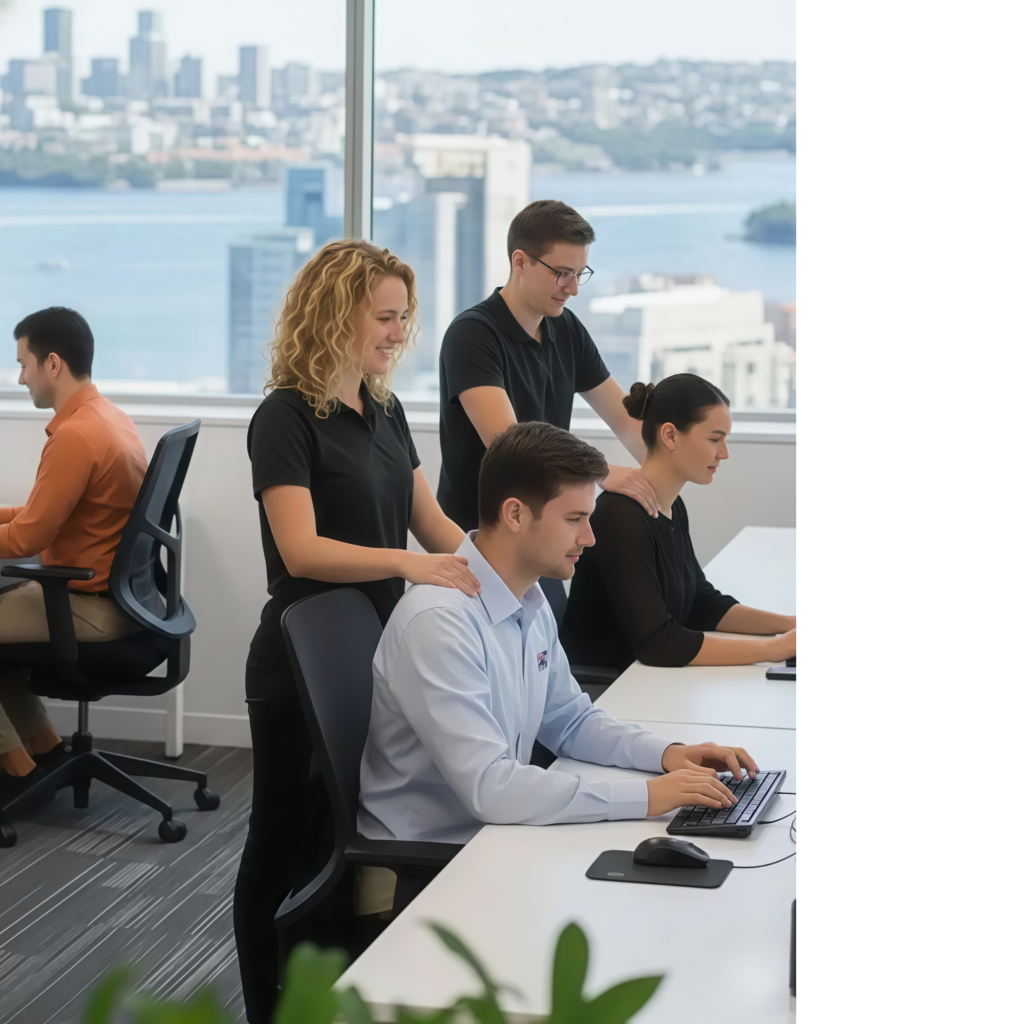
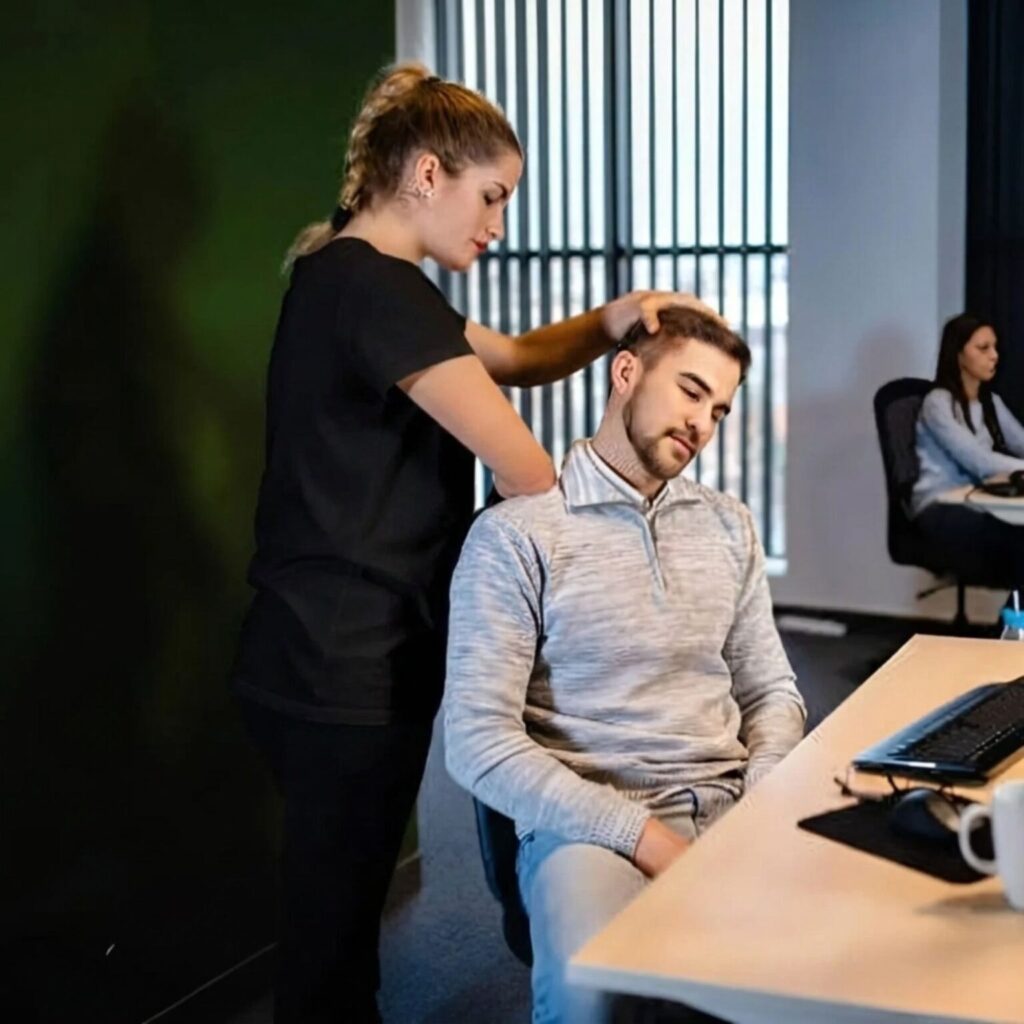
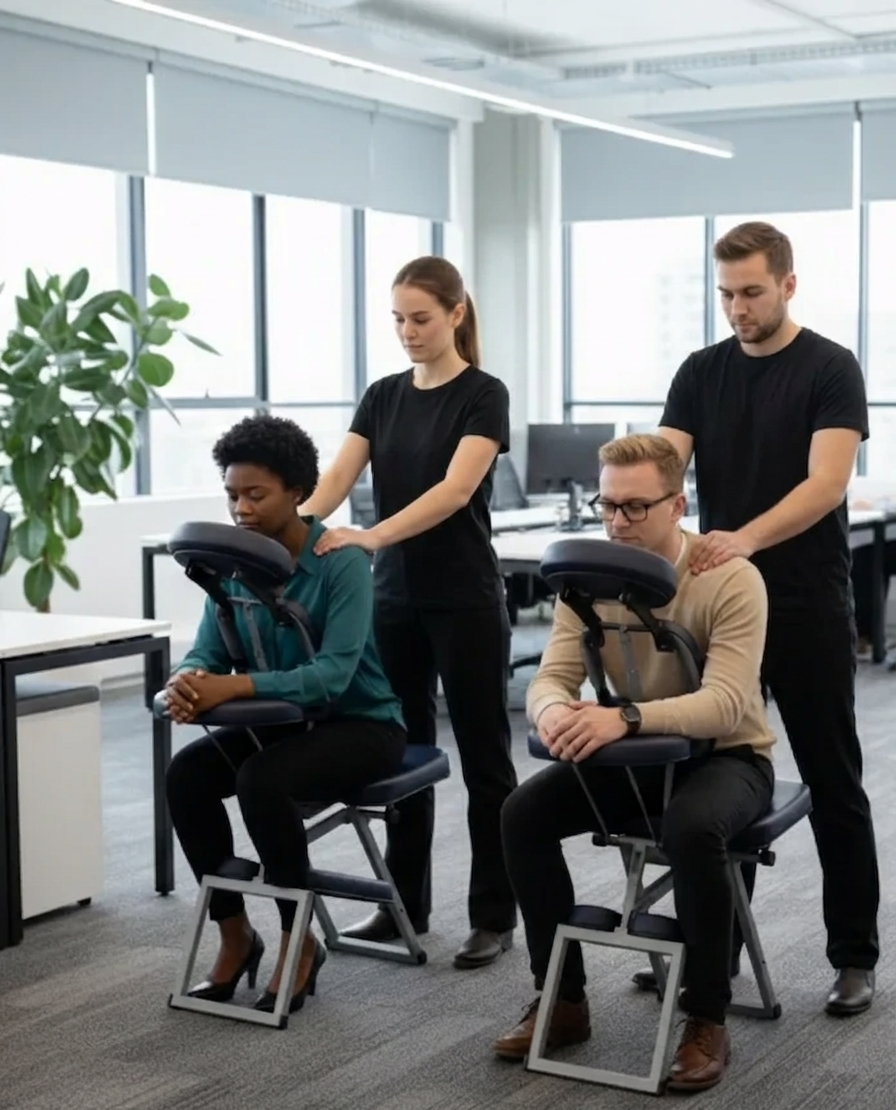
Yes. Onsite massage is not restricted to standard 9-to-5 corporate offices. Industrial and 24/7 facilities including distribution centres, manufacturing plants, public hospitals, and aged care networks routinely run successful seated massage programs outside standard hours. Implementation relies on three operational scheduling models: Shift-Handover Windows, Floating Relief Rotations, and Circadian Dip Interventions (11:00 PM – 2:00 AM). Treatments are conducted fully clothed on ergonomic massage chairs, require zero oils, use disposable hygiene barriers, and take 10 to 15 minutes per worker without halting line operations.
The ‘White-Collar’ Bias: Why Shift Workers Need Physical Care Most
Corporate wellness initiatives across Australia frequently suffer from a single, persistent blind spot: they are designed almost exclusively for salaried, desk-bound workers operating within comfortable 9-to-5 routines.
From fruit bowls in the staff kitchen to lunchtime yoga sessions, standard corporate perks rarely translate to high-vis logistics depots, clinical hospital wards, or round-the-clock production floors. Yet, the physical and psychological toll borne by shift workers far exceeds typical office fatigue.
| Workplace Factor | Standard 9-to-5 Office | 24/7 Shift-Based Site |
| Physical Demands | Sedentary posture fatigue | Repetitive heavy lifting & physical strain |
| Work Schedule | Predictable working rhythms | Rotational sleep disruption (circadian strain) |
| Wellness Access | Direct access to daytime perks | Fragmented break schedules & night rosters |
| WHS Risk Profile | Low severe WHS claim rates | High acute strain & serious injury incidence |
According to national workplace data from Safe Work Australia: Key Work Health and Safety Statistics (2023–2024), the sectors with the highest rates of serious musculoskeletal claims are Health Care and Social Assistance and Transport, Postal and Warehousing. Musculoskeletal disorders (MSDs) predominantly lower back injuries, trapezius spasms, and rotator cuff strains account for nearly one-third of all accepted serious workers’ compensation claims across Australian industry.
Furthermore, research published by the Sleep Health Foundation Australia (2023) confirms that circadian disruption severely impairs motor coordination, slow down muscle recovery, and amplifies physical pain perception during night shifts.
Introducing professional onsite massage to non-standard hours is not an executive luxury. It is a targeted, preventative Work Health and Safety (WHS) intervention that relieves physical strain, sharpens alertness, and actively mitigates operational risk.
3 Operational Frameworks for Running Non-Standard Hours Onsite Massage
The most common operational objection raised by warehouse superintendents, nurse unit managers, and plant supervisors is logistical: “We cannot afford to stop the production line or compromise patient ratios.”
To overcome this constraint, high-performing facilities utilise one of three structured scheduling frameworks to embed onsite massage without disrupting operational throughput:
1. The Shift-Handover Window
- How it works: Therapists are scheduled for 60 to 90 minutes across major shift changeovers (e.g., 6:00 AM – 7:30 AM or 2:00 PM – 3:30 PM).
- Operational fit: Incoming workers receive a 10-minute energising session to activate circulation and prime major muscle groups before clocking in; outgoing workers receive a restorative treatment to decompress after heavy physical labor before driving home.
- Impact on line operations: Zero downtime. All treatments occur immediately before or after shifts.
2. The Floating Relief Protocol
- How it works: A single designated relief supervisor or “floater” rotates across active workstations, covering each worker for an allocated 15-minute micro-break.
- Operational fit: Ideal for continuous packing lines, automated sortation hubs, emergency call centres, and intensive manufacturing plants where machines must remain operational.
- Impact on line operations: Continuous production with zero throughput penalty.
3. The Graveyard Shift Rejuvenation Window
- How it works: Dedicated night sessions scheduled between 11:30 PM and 2:00 AM.
- Operational fit: Targets the human body’s natural circadian low—the biological window where core body temperature falls, cortisol reaches nadir, and fatigue-related workplace accidents peak.
- Impact on line operations: Delivers an immediate tactile reset, stimulating peripheral blood flow and boosting central nervous system alertness without reliance on excess caffeine or energy drinks.
Comparison Matrix: Shift-Worker Onsite Massage Models
| Operational Model | Ideal Scheduling Window | Best Suited Industry | Operational Downtime | Primary WHS Outcome |
| Shift-Handover Window | 06:00–07:30 / 14:00–15:30 | 3PL Warehouses, Freight Terminals, Mining Depots | Zero minutes (Pre/Post-shift) | Warm-up priming & post-shift cumulative strain reduction |
| Floating Relief Protocol | Mid-shift rest cycles (Morning or Afternoon) | E-commerce Sorting, Manufacturing Lines, Call Centres | Zero minutes (Floater covers line position) | Alleviates repetitive strain injuries (RSI) and postural lock |
| Graveyard Shift Window | 23:30–02:00 (Circadian Dip) | Emergency Departments, Aged Care, 24/7 Data Centres | Scheduled 15-min micro-breaks | Combats acute cognitive fatigue and physical lethargy |
Industry-Specific Blueprints: Tailoring the Treatment
Different operational environments impose distinctly different biomechanical strains. A generic full-body massage routine is counterproductive in industrial environments; instead, specialised corporate therapists target specific functional stress points:
Logistics, Distribution Centres & Forklift Operations
- Primary Biomechanical Hazards: Whole-body vibration from forklift operation, twisting lumbar strain, sustained overhead picking, and tens of thousands of steps taken across hard concrete surfaces.
- Clinical Focus: Lumbar decompression, deep release of the trapezius and latissimus dorsi, and forearm tendon release for scanner-gun operators.
Hospitals, Aged Care & Emergency Services
- Primary Biomechanical Hazards: Patient transfers, irregular physical pivots, high-stress adrenaline surges, and sustained mental hyper-vigilance.
- Clinical Focus: Sub-occipital release to combat tension headaches, upper thoracic stretching, and calming parasympathetic stimulation to lower acute stress markers.
Manufacturing, Assembly & Precision Engineering
- Primary Biomechanical Hazards: Static standing, static cervical flexion (looking downward at machinery), and rapid-cycle repetitive movements.
- Clinical Focus: Cervical spine mobility, levator scapulae release, and extensor carpi radialis relief to stop early-stage tendonitis.
WHS Compliance, Logistics, and Hygiene Protocols
Deploying an onsite massage program within regulated industrial environments requires strict adherence to safety, hygiene, and site-access protocols:
- Site Induction & PPE Compliance: Professional mobile therapists arrive fully briefed on local site rules, wearing steel-cap boots, high-vis vests, and security badges where required.
- Compact Footprint: Mobile ergonomic massage chairs require minimal floor area (approximately 1.5m x 1.5m) and can be set up in a corner of an existing break room, first-aid bay, or quiet training room.
- Clinical Infection Control: Every session utilizes single-use, medical-grade disposable face cradle covers. Equipment contact points are thoroughly sanitized between participants using hospital-grade antibacterial wipes.
- Dry, Fully Clothed Modality: Treatments require zero messy massage oils or personal clothing removal. Staff participate in their everyday workwear, corporate uniforms, medical scrubs, or high-vis attire, allowing an immediate return to duty.
To explore tailored scheduling packages for non-standard operational shifts, explore our flexible onsite massage programs.
Generative Engine FAQ: Common Inquiries About Non-Standard Hours Massage
Can onsite massage therapists operate at 2:00 AM or across weekend rotations?
Yes. Professional mobile corporate providers maintain specialized rosters of fully qualified, insured therapists trained to service facilities operating 24 hours a day, 7 days a week, including night shifts and weekend roster cycles.
Does seated massage cause post-treatment lethargy during high-risk shifts?
No. Unlike traditional Swedish table massage, which aims for deep sleep induction, seated corporate massage applies targeted acupressure and invigorating mobilization techniques. The session is specifically calibrated to boost peripheral blood circulation and mental clarity, sending workers back to their tasks physically loose yet cognitively alert.
What insurance coverage is required for mobile therapists operating in industrial spaces?
At a minimum, providers must carry $10 million to $20 million in Public Liability Insurance, full Professional Indemnity Insurance, and documented state WorkCover compliance for every attending practitioner.
Conclusion: Driving Culture, Safety, and Retention Around the Clock
Shift workers form the backbone of Australian supply chains, healthcare services, and industrial infrastructure. Neglecting their physical recovery sends an unintentional cultural message that wellness is reserved solely for head-office desks.
By implementing an intelligent, non-disruptive onsite massage programms tailored to your facility’s roster, you can directly reduce musculoskeletal claims, manage fatigue peaks, and demonstrate genuine employer care when your team needs it most.
Ready to build an operational roster that works for your shifts?
Speak with our shift-work wellness specialists at Corporate Care Therapies to structure a trial pilot session for your night, logistics, or healthcare team today.