Fifteen minutes doesn’t sound like enough time to change much. But a corporate chair massage isn’t just a pleasant pause in the day — it’s a structured, therapist-led sequence that moves the body through a real physiological shift, from a tense, alert state into something closer to genuine rest, in the time it takes to answer a couple of emails.
This article walks through what actually happens, minute by minute, during a typical session, and looks honestly at what the research says about the nervous system response — including where the evidence is strong and where it’s still modest, so expectations stay realistic rather than overhyped.
The starting point: a body stuck in alert mode
Most desk-based workdays keep the body in a low-grade version of the same state it uses for genuine emergencies. The Cleveland Clinic explains that the body runs on two nervous system modes: a sympathetic “fight or flight” mode geared for stress, and a parasympathetic mode built for rest, digestion and recovery. Back-to-back meetings, tight deadlines and constant notifications tend to keep people leaning toward the first mode far more than the body was designed for, and that shows up physically as tight shoulders, a stiff neck, and shallow breathing that most people stop noticing entirely.
A corporate chair massage is designed to interrupt that pattern directly, using focused, hands-on work rather than asking someone to simply “relax” through willpower alone.
The equipment behind the experience
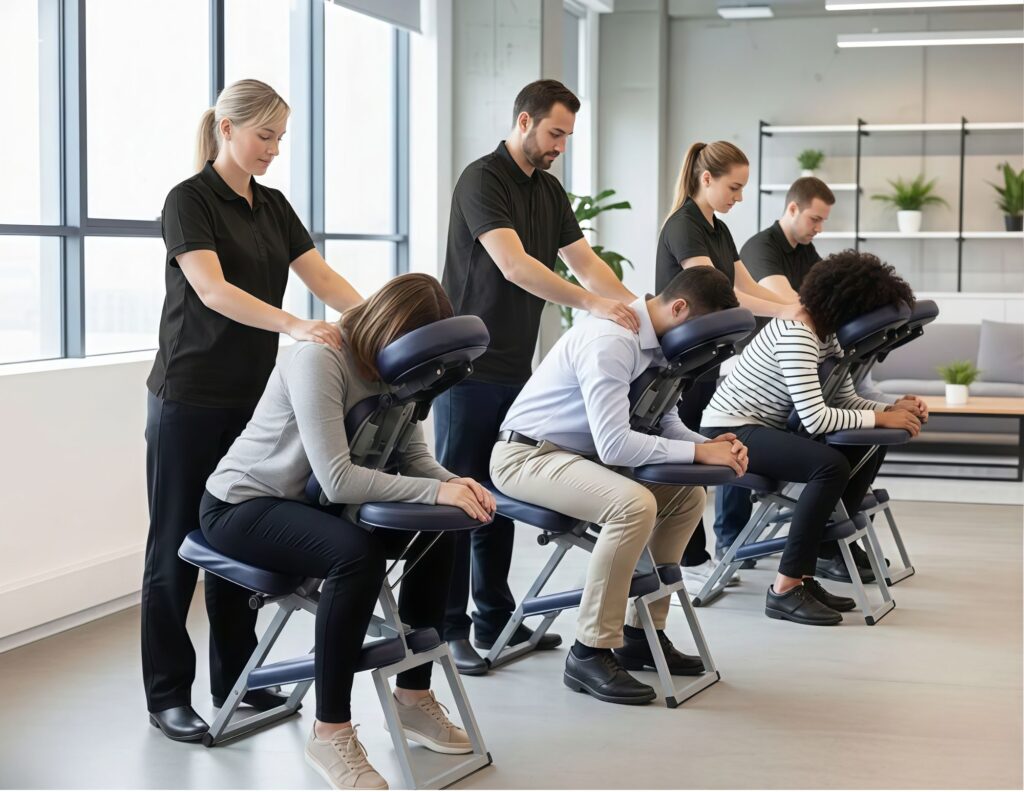
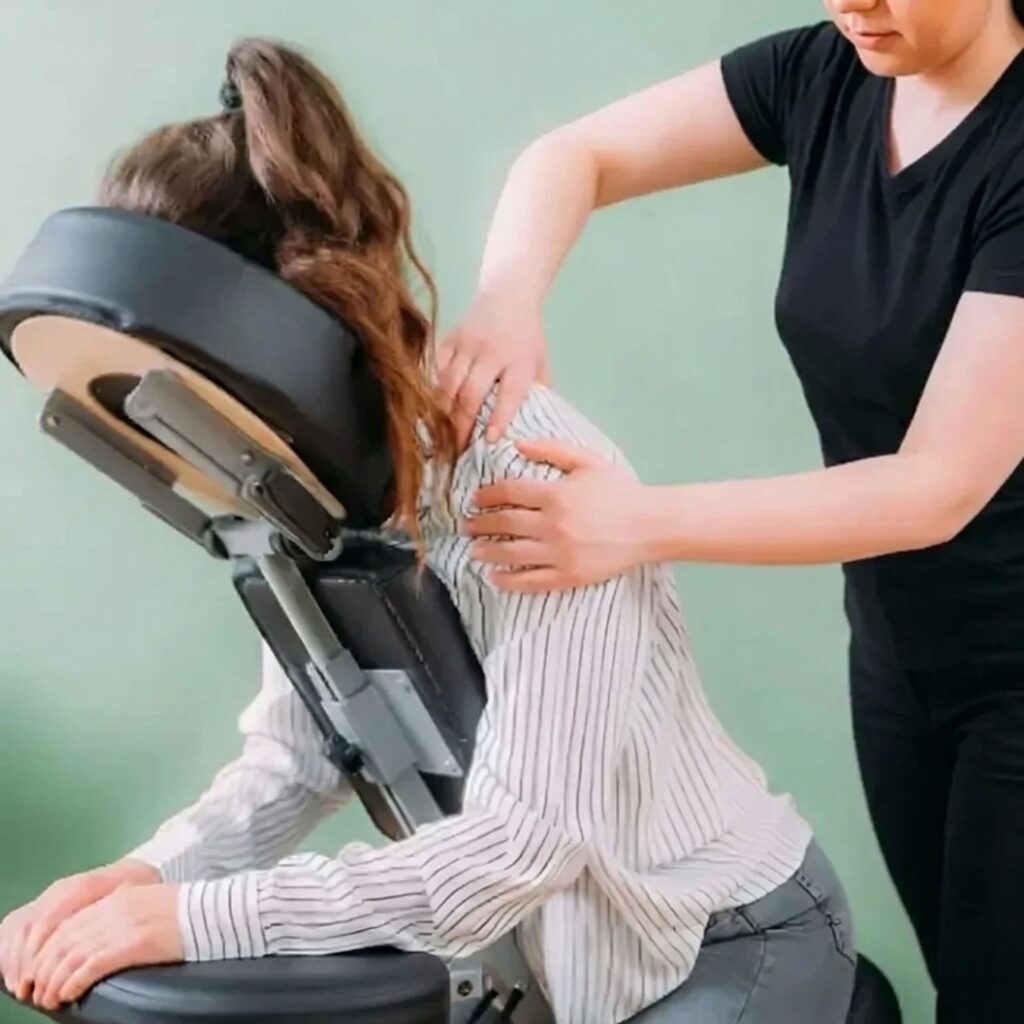
Part of what makes a corporate chair massage practical in an office setting is the chair itself. A purpose-built massage chair leans the body forward into a padded face cradle, with a chest pad supporting the torso and padded armrests keeping the shoulders relaxed rather than hunched. That forward-leaning position opens up the upper back, shoulders and neck — exactly the areas carrying the most tension from desk work — without requiring anyone to undress or lie down. Most chairs adjust in height and angle within seconds, which is part of why a therapist can move between people quickly during a single office visit.
The anatomy of a 15-minute corporate chair massage
A well-run session follows a fairly consistent shape, even though every therapist adapts slightly to the person in the chair. Breaking it down by minute shows how the sequence builds from initial settling to a genuine shift in state.
Minutes 0 to 3: settling in
The first few minutes are about downshifting rather than deep work. Seated forward into a specially designed ergonomic chair, fully clothed, the person’s breathing typically slows within the first minute simply from sitting still with a clear signal that this time is protected. The therapist usually opens with broad, gentle strokes across the upper back and shoulders — not yet targeting anything specific, just giving the nervous system a cue that it’s safe to start letting go.
Minutes 3 to 8: releasing surface tension
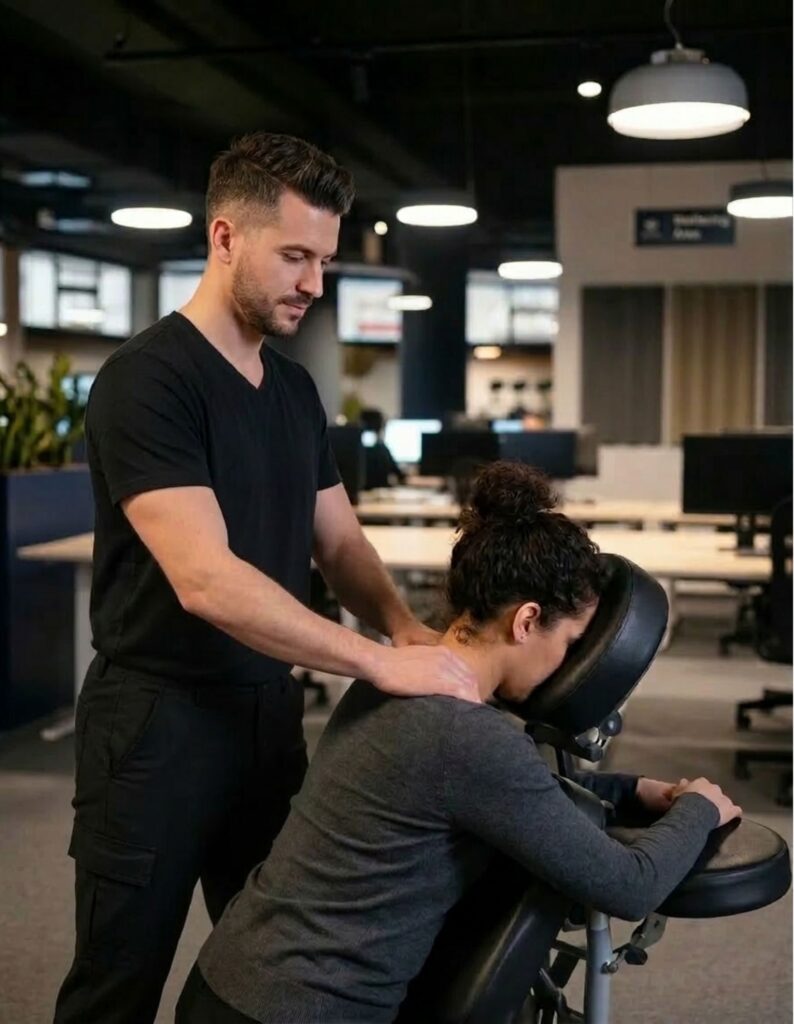
This is where pressure builds gradually across the shoulders, upper back and neck — the areas that absorb the most strain from hours of screen work and static posture. Kneading and compression techniques work through the more superficial layers of muscle first, which is usually where people feel the most immediate, obvious relief. It’s common to notice areas of tightness you hadn’t consciously registered until pressure is applied directly to them.
Minutes 8 to 12: working the deeper knots
With the surface tension eased, a therapist can work more precisely into deeper, more localized knots — often around the base of the neck, between the shoulder blades, or along the upper spine. This is typically the most focused part of the session, and where longer-standing tension, built up over weeks rather than a single stressful day, gets the most direct attention.
Minutes 12 to 15: transitioning back
The final few minutes ease off in intensity, returning to the same broad, slower strokes used at the start. This isn’t just a stylistic choice — a gradual transition out of focused pressure helps avoid the slightly disoriented feeling that can come from standing up too quickly after deep muscular work, and gives the body a smoother path back into the rest of the working day.
What the science actually says about the reset
It’s worth being precise here rather than overselling the effect. A randomised pilot study of mechanical massage in Swedish workplaces, published in Frontiers in Public Health, measured cortisol and heart rate variability in employees over eight weeks. It found a small but measurable reduction in cortisol in the massage group, while heart rate variability on its own didn’t shift significantly — though when blood pressure was factored in in, both showed some modest benefit. In plain terms: there’s real, peer-reviewed evidence that massage nudges the body’s stress-hormone response in the right direction, but the effect size in controlled studies is modest, not dramatic, and individual responses vary.
That modest, honest picture lines up with what most people report anecdotally — a noticeable sense of calm and looser muscles immediately afterward, building gradually with more regular sessions rather than transforming in one sitting. Corporate chair massage isn’t a medical treatment and isn’t a substitute for professional care; anyone managing a specific injury or health condition should check with their doctor or physiotherapist before booking a session.
Why 15 minutes specifically works for the workplace
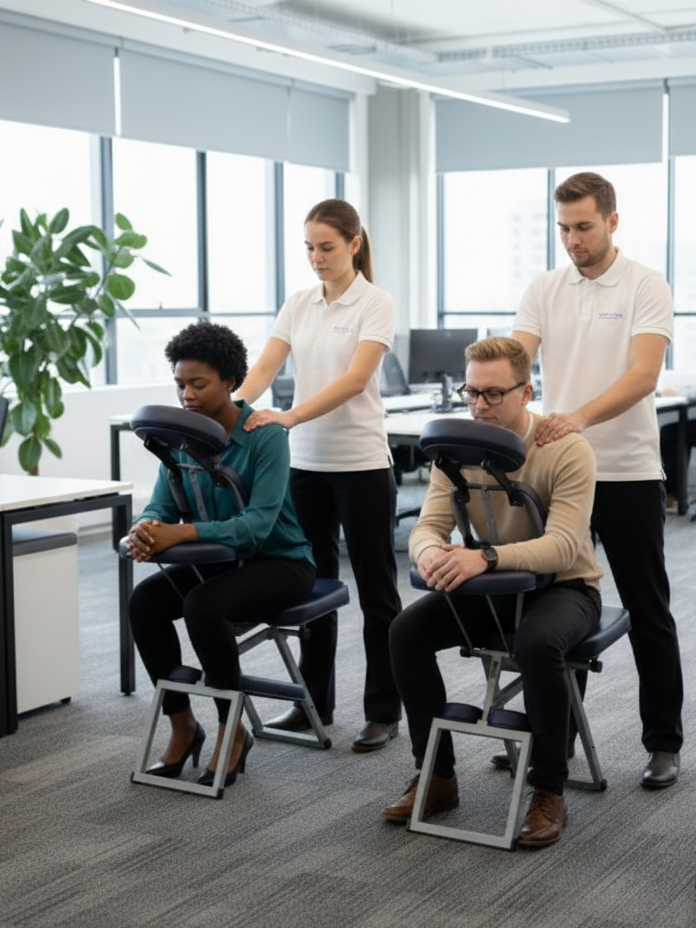
Longer massage sessions have their place, but 15 minutes is close to the sweet spot for a workday setting: long enough for the body to move through the settling, releasing and deep-work phases described above, but short enough that a whole team can be seen in a single afternoon without derailing the day’s schedule. It’s also a low enough time commitment that even sceptical employees tend to try it at least once — and trying it is usually what turns a curious observer into a regular participant.
From a scheduling perspective, a single therapist working 15-minute sessions back to back can typically see somewhere between 12 and 16 people across a half-day booking, which is part of why this format scales so well for a whole floor or department rather than just a handful of people. Longer 20 or 30 minute formats remain available for smaller teams or special events where a deeper session makes more sense.
What to expect physically during and after a session
- A gradual sense of warmth and looser muscles as the session progresses
- Occasional mild tenderness in areas of deeper tension, similar to the feeling after a firm stretch
- A noticeable urge to drink water afterward, which is worth listening to
- A calmer, more settled feeling returning to work, rather than grogginess
Everyone’s experience varies slightly depending on how much tension has built up beforehand, so it’s normal for a first session to feel different from a fifth or sixth. Regulars often report needing less time in the “settling in” phase over successive sessions, as the body becomes more familiar with the process and shifts into a relaxed state more quickly.
Making the reset last beyond the chair
Fifteen minutes resets the body, but the effect fades faster if the same posture and habits that caused the tension resume immediately afterward. Short, simple movement breaks between sessions — outlined in Corporate Care Therapies’ office stretches guide — help extend that looser, calmer feeling further into the week, particularly for the neck and shoulders, which tend to tighten up again fastest.
For businesses running a recurring program, the same logic applies at a larger scale: a single session every few months resets very little on its own, while a consistent fortnightly or monthly rhythm gives the body less time to fully return to its baseline tension before the next reset. Neither replaces good desk ergonomics or regular movement through the day — the two work best together.
How Corporate Care Therapies delivers this experience
Corporate Care Therapies has provided seated chair massage to Australian workplaces for over 20 years, using specially designed ergonomic chairs and accredited, insured therapists trained in exactly this kind of focused, time-efficient session. It can be booked as a one-off event or folded into a recurring corporate wellness program, and further context on how Australian workplaces are approaching this kind of benefit is available in Massage at Work: why Australian businesses are prioritising workplace wellness in 2026.
Summary
A corporate chair massage isn’t just a nice break — it’s a structured sequence that moves the body from an alert, tense state toward genuine rest, working from broad settling strokes through surface tension and into deeper, localized knots before easing back out. The research behind it is real but modest: small, measurable shifts in stress hormones rather than a dramatic cure-all. Fifteen minutes is enough time to feel that shift without pulling anyone away from their day for long, and pairing it with simple movement habits between sessions helps the effect last well past the chair.
Curious what a corporate chair massage would feel like for your team? Contact Corporate Care Therapies to book a session and see the reset for yourself.