Workplace wellbeing massage is a low-cost, high-visibility first step for small teams. See where it fits in a budget wellbeing plan. Get a quote.
Workplace wellbeing massage on a budget: what to do first
Workplace wellbeing massage is a short, fully clothed massage delivered at the workplace, at a desk or in a portable chair. This guide shows small and medium businesses where to begin a wellbeing strategy when budgets are tight, and why massage can be one of the most visible and lowest-effort first steps.
Why small teams can’t wait for a perfect wellbeing budget
Workplace wellbeing massage is a short, on-site massage, typically 10 to 20 minutes per person, delivered at an employee’s desk or in a portable ergonomic chair. For a small business, it is one of the few wellbeing initiatives that can start within a couple of weeks without building anything new.
That matters because most small businesses are not short of good intentions. They are short of budget and time. The 2025 Small Business Perspectives Report from COSBOA and Commonwealth Bank, based on more than 800 owners, found that 64 per cent reported lower profits than the previous year and 72 per cent named operating costs as the main barrier to growth. In that climate, a large wellbeing program can feel out of reach.
Yet the people side is not waiting. Gallagher’s 2025 Workforce Trends Report, based on more than 2,500 respondents, found that more than a quarter of employees were currently experiencing burnout, and that they were less confident than a year earlier that their feedback would be acted on. The same report found a gap between what people want and what is offered: close to half want financial benefits such as budgeting advice, yet fewer than 30 per cent are offered them.
The good news is that a small budget does not mean a small strategy. It means a sequenced one. This guide sets out the order we recommend, where workplace wellbeing massage fits in it and how to run a low-cost trial.
Start with a plan, not a perk
On a tight budget, the best order is to listen first, fix the basics second, add one visible win third and review before spending more. Skipping straight to a perk risks spending money on something your team did not ask for.
Step 1: ask what your team actually wants
Asking costs almost nothing. A five-question survey or a short team conversation will show what matters, whether that is quieter focus time, flexible hours, better equipment or a visible break in the week. Gallagher’s finding that what employees want and what they are offered often do not match is a good reason to check before you commit.
Step 2: check the basics first
Before adding anything new, look at what is already causing strain: heavy workloads, unclear roles, back-to-back meetings or equipment that does not fit. These fixes are usually cheap, and they make every later initiative work better.
There is room to improve here. In a survey by Peninsula Australia of small and medium business owners, 51 per cent of Australian employers had seen an increase in staff experiencing mental health challenges, and 76 per cent were not confident their staff would feel safe speaking up about them. Peninsula offers an employee assistance program itself, so read the figures with that in mind. A wellbeing perk cannot make up for a workload that is unsustainable.
Step 3: add one visible win
Once you have listened and fixed the obvious issues, add one thing your team can see and feel. A visible action is easier for people to notice than a policy document. A workplace wellbeing massage session is a strong candidate, for the reasons below.
Step 4: review before spending more
After a trial, ask the team what worked and what did not. Track simple signals, such as how many people took part and whether they want it again. Only then decide whether to scale up, adjust or add another initiative.
Where workplace wellbeing massage fits in a small-business strategy
Workplace wellbeing massage fits as the visible, low-effort step in a wellbeing plan. The provider brings the equipment and the therapist, sessions run from 5 to 30 minutes, and frequency can range from once-off to weekly. That lets a small business start small and scale only if the team responds.
Why it is highly visible
Few wellbeing initiatives are as easy to notice. A therapist arrives, colleagues see it happening and the conversation spreads. One client, GU Health, described its seated chair massages as a big talking point in the office. Another, Burgess Rawson, said its team looks forward to its fortnightly massages.
That visibility is part of the value, because the whole team can see that the business is investing in them. It only builds trust, though, if it is matched by listening. Gallagher’s finding that employees are less confident their feedback will be acted on is a reminder to pair massage with the steps above.
Why it takes little effort
For a busy owner or office manager, effort is often the real cost. Corporate Care Therapies handles booking, therapist allocation, on-site setup and delivery, and brings everything needed for the session.
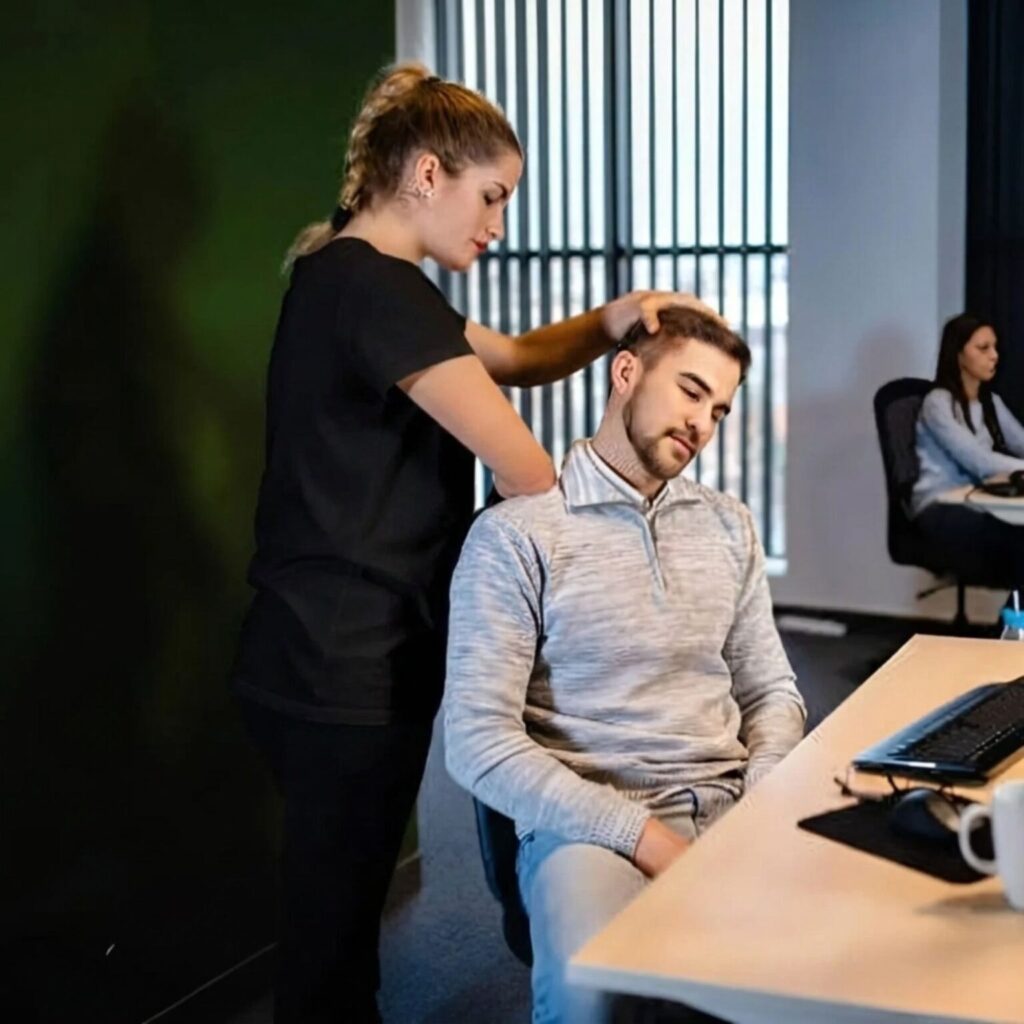
Desk massage can run in as little as five minutes, with up to eight people seen an hour, and it happens at the workstation, so it needs no spare room. Our guide to desk massage in compact shared workspaces shows how this works in small offices. We recommend booking one to two weeks ahead.
Where it does not fit
Workplace wellbeing massage is not a substitute for manageable workloads, good management or mental health support. It will not fix a workstation that causes strain, and it is not a treatment. If an employee has persistent or worsening pain, they should see their GP or a physiotherapist. Treat massage as one part of a wider plan.
How to run a workplace wellbeing massage pilot on a small budget
You do not need to commit to a regular program on day one. A short trial lets you test interest before you decide how much to spend. These are the levers that shape the cost and the experience.
| Lever | Options | How to choose |
| Frequency | Once-off, quarterly, monthly, fortnightly or weekly | Start once-off or quarterly, then adjust once you see take-up |
| Session length | 5 or 10 minutes at the desk; 10 to 30 minutes with equipment | Shorter sessions reach more people; longer sessions suit smaller groups |
| Participants | The whole team or a pilot group | Open it to everyone, but keep the first trial a manageable size |
| Format | Desk massage or seated chair massage | Desk massage needs no extra room; chair massage suits a quiet corner |
Start with a trial. Book a once-off or quarterly visit and see how many people sign up before deciding on a regular schedule.
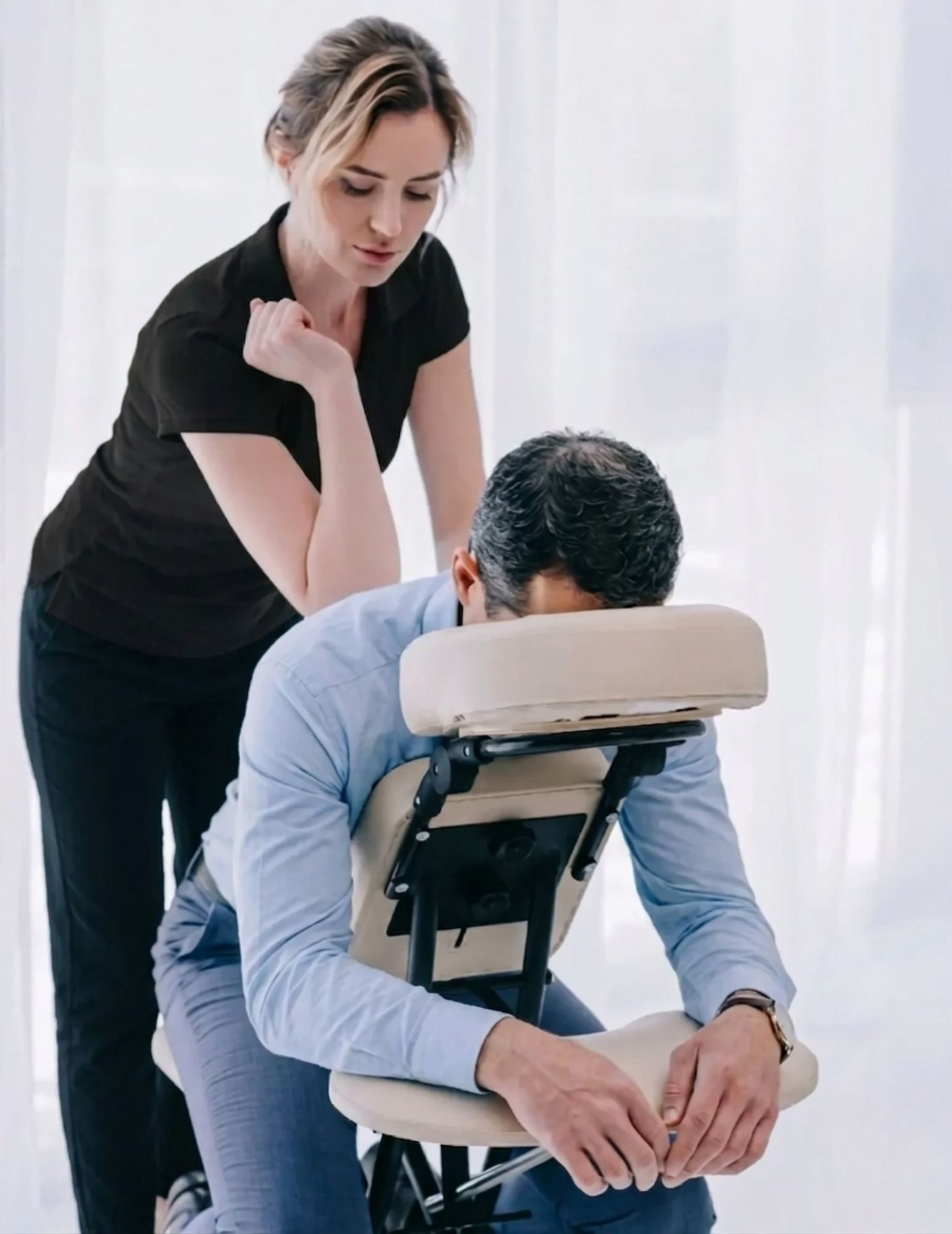
Match the format to your space. Desk massage suits compact offices, while seated chair massage suits teams who can spare a quiet corner. Our comparison of desk massage and seated chair massage helps you decide.
Keep it voluntary. Make it opt-in and easy to join. Staff should never feel pressured to take part.
Ask three questions afterwards. For example: “Would you like this again?”, “How often would suit you?” and “What else would make your week easier?” The answers guide your next step and show the team that you are listening.
Choose a rhythm you can sustain. Once you know the response, pick a schedule your budget can carry. Our guide to how often to book explains how frequency shapes what a program can achieve.
What to do after the pilot
A pilot gives you evidence from your own team, which is more useful than any benchmark. Use it to decide the next step, in order of effort and cost.
| Stage | What to do | Why it comes in this order |
| 1. Listen | Run a short survey or team conversation | It costs almost nothing and shows what matters |
| 2. Fix the basics | Review workloads, equipment and manager check-ins | Low cost, and it removes strain at the source |
| 3. Add a visible win | Run a workplace wellbeing massage trial | Quick to start and easy for the team to notice |
| 4. Review | Ask what worked and track take-up | Prevents spending on things nobody uses |
| 5. Invest further | Consider an employee assistance program, ergonomic upgrades or a regular massage schedule | Backed by your own team’s feedback |
Support structures are still thin in many small businesses. In the same Peninsula Australia survey, only 39 per cent of Australian employers had an employee assistance program and 72 per cent offered no dedicated mental health days. A staged approach lets you add support as your budget allows. For ideas on what else to include, see our article on employee benefits that include chair massage for staff.
Frequently asked questions about workplace wellbeing massage
What is workplace wellbeing massage?
Workplace wellbeing massage is a short, fully clothed massage delivered at the workplace, either at the employee’s desk or in a portable ergonomic chair. Sessions typically run 10 to 20 minutes per person, and the therapist brings the equipment. It is designed to ease tension and give teams a visible break in the working day.
How much does workplace wellbeing massage cost?
Cost depends on the number of participants, how often you book, the length of each session and the format. A small trial is the simplest way to start. Tell Corporate Care Therapies your team size, preferred frequency and session length, and you will receive a quote based on those details.
How do I start a wellbeing strategy on a small budget?
Start by asking your team what they want, then fix the basics, such as workload and equipment. Add one visible initiative, such as a massage trial, and review the results before spending more. This order keeps costs low and avoids paying for things nobody uses.
Is workplace wellbeing massage enough on its own?
No. It works best as one part of a wider plan that includes listening to staff, manageable workloads and access to support. Massage is not a treatment, and employees with persistent or worsening pain should see their GP or a physiotherapist.
Tell us your team size and start small with workplace wellbeing massage
For over 20 years, Corporate Care Therapies has provided massage to businesses and events across Australia, including Melbourne, Sydney, Brisbane, Perth, Adelaide and the Gold Coast, as well as regional areas. Whether your team is 10 people or 500, we can plan a workplace wellbeing massage trial around your space, schedule and budget, with equipment and therapist allocation taken care of.
Tell us your team size, how often you would like to book and how long each session should be, and we will come back with a quote. Explore our corporate wellness programs to see how a trial can grow into a regular program.