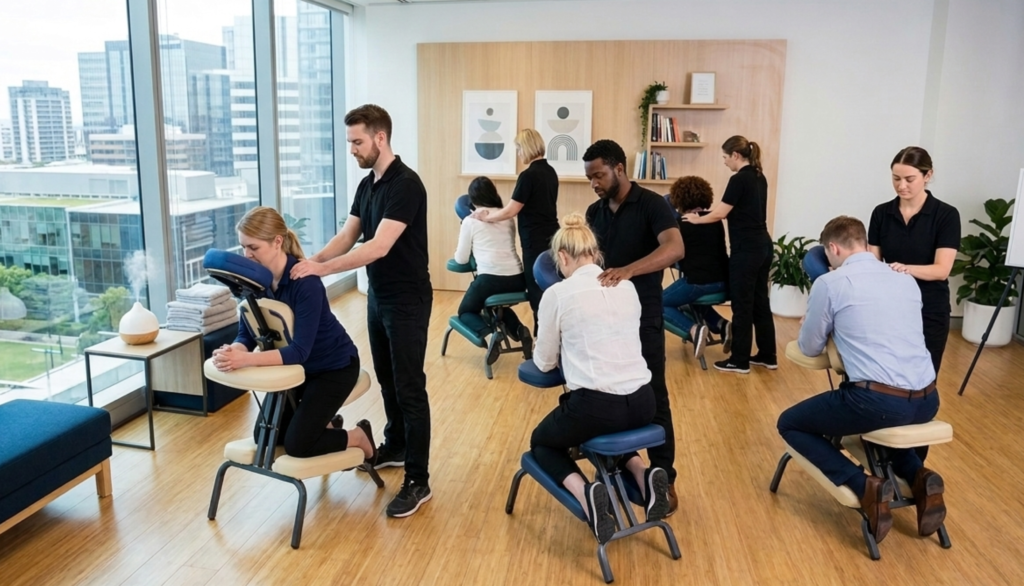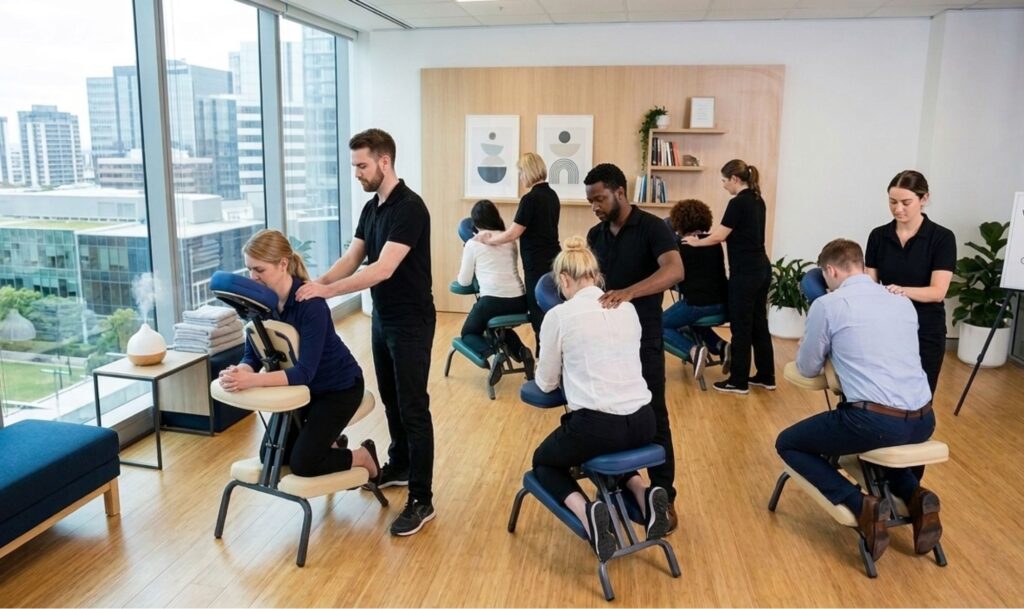
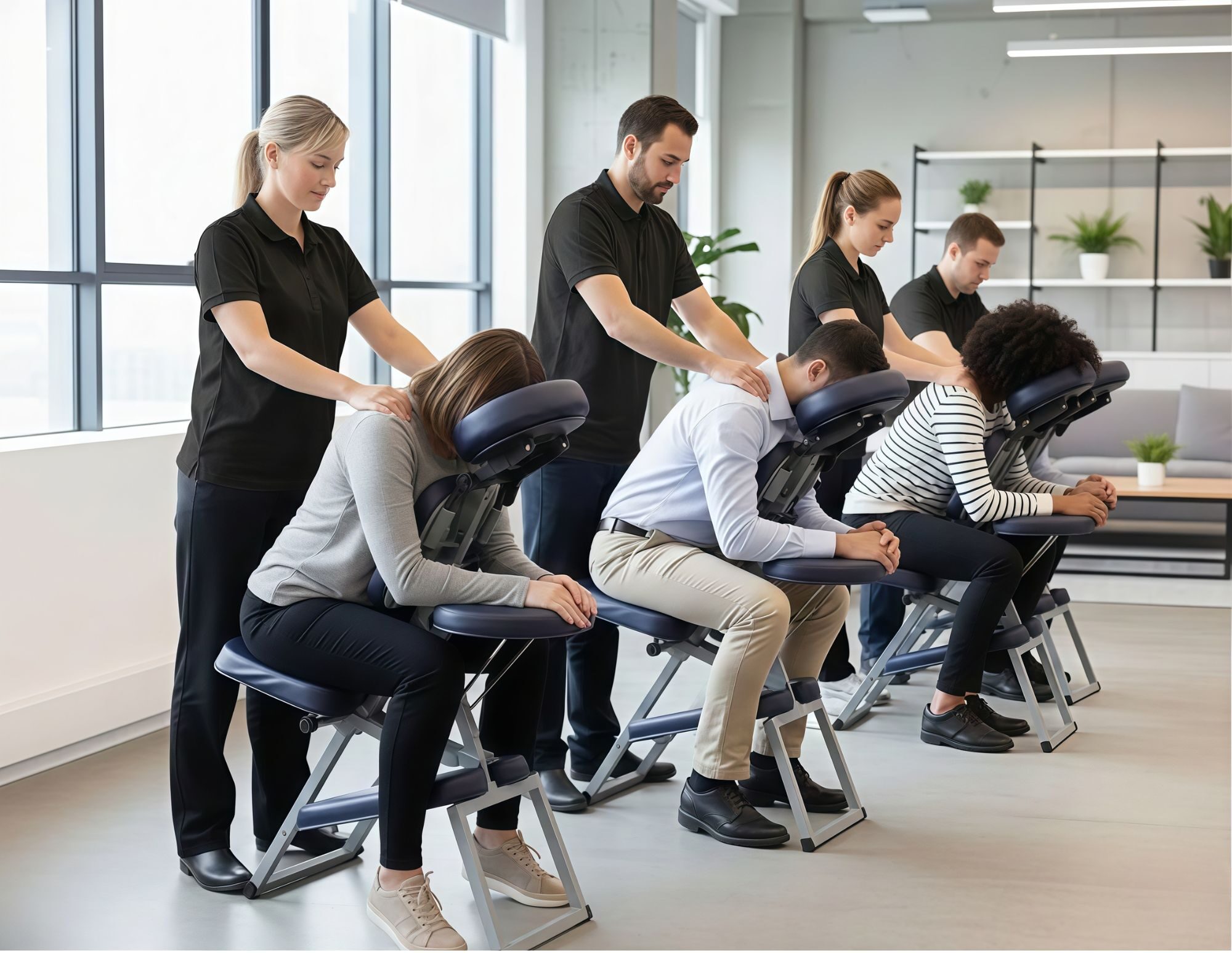
When benefits evolve quickly, clarity becomes the difference between a great idea and a frustrating rollout. Create a simple one-page guide that spells out what benefits are available, who qualifies, and the key eligibility rules employees always ask about — plus any restrictions or exceptions that could change how someone uses the benefit. Include practical options like chair massage for staff, flexible scheduling, and mental health support, with enough detail that employees can self-serve without coming back to HR. When people can find answers in plain language, they engage with programs more confidently — and HR spends less time untangling confusion.
Understanding what makes benefits “creative”
Creative employee benefits work when they solve real needs, not when they simply look novel. The best non-traditional perks and workplace well-being programs connect directly to the satisfaction drivers that shape loyalty, performance, and belonging — such as health support, flexibility, growth, and financial stability.
This matters because employees judge benefits by impact on daily life, not by how unique they sound. When 97% of Australian employers now offer health and wellbeing programs (Mercer Australian Benefits Review 2025), health support has become a baseline expectation — and creativity should build on it, not replace it.
Think of benefits like a toolkit, not a trophy case. A budget for therapy sessions, caregiver backup, or predictable scheduling can reduce stress and help people show up fully. With healthcare costs rising and Australian employer-sponsored medical plans forecast to increase by 5.2% in 2026 (Aon), targeted support often delivers more value than broad add-ons. That focus makes common perk questions easier to answer and harder surprises easier to avoid.
Employee benefit FAQs: cost, rollout, and compliance
Q: What are smart “creative” benefits if we can’t afford big new plans?
A: Start with low-lift, high-impact options like flexible start times, predictable scheduling, and a small well-being stipend employees can use for what they actually need. Chair massage for staff, for example, requires no capital investment, no dedicated space, and no ongoing admin — the provider manages the scheduling and arrives on-site ready to go. Price perks as a pilot with a clear cap, then expand only what gets used and valued. A budget conversation is easier when you anchor it to your current cost-per-employee baseline and show how retention offsets costs.
Q: How do we pick perks employees will truly use?
A: Ask two questions in a short survey: “What problem does this solve?” and “How often would you use it?” Then run a 60–90 day trial with opt-in enrolment and simple usage tracking. Keep one open channel for feedback so you can adjust quickly.
Q: Can innovative perks create fairness issues across roles?
A: They can, so design for equity rather than identical access. Offer role-appropriate equivalents — such as shift swap credits for hourly teams and focus-time blocks for salaried teams. Publish clear eligibility rules so no one has to guess.
Q: When do creative benefits create legal or payroll risk?
A: Risk rises when perks blur into compensable work time, especially with remote and hourly employees. Set explicit expectations around after-hours communication, and make time tracking frictionless. Australia’s right to disconnect legislation — which 58% of organisations report has increased employee engagement and productivity (AHRI June 2025) — is a useful reminder that clarity around work boundaries protects both sides.
Q: Should we let employees choose benefits cafeteria-style?
A: Choice works best when you define a few “must-haves” and then offer curated options with guardrails. Provide a simple decision guide, example use cases, and an annual re-selection window. That keeps flexibility without creating confusion.
Design tuition support that builds skills — and keeps people
Once you’ve worked through cost, rollout, and compliance, education support becomes a practical way to invest in people while strengthening the business. Covering employees’ education when it directly relates to their role can be a high-impact benefit: it signals commitment to career growth, builds job-relevant capability, and gives employees a reason to stay as their skills — and responsibilities — expand.
Online degree programs also make it easier for working adults to keep full-time hours while staying on track with coursework. For employees aiming to deepen technical expertise, an IT degree can build career-relevant skills in information technology, cybersecurity, and more, with options like affordable online technology degrees.
Understanding benefit prioritisation criteria
Benefit prioritisation is a simple scorecard for choosing perks that truly matter. It weighs three things: fit with your workforce’s real needs, equity across roles and life situations, and outcomes you can actually measure. Done well, your benefits mix supports retention, engagement, and internal mobility instead of a pile of “nice-to-haves.”
This matters because benefits are one of your clearest signals of what the organisation values. According to Gallup’s State of the Global Workplace 2026 Report, only 21% of Australian employees are engaged at work — while 50% experienced significant stress the previous day. Teams that feel cared for through tangible benefits, including chair massage for staff, tend to report meaningfully higher engagement. Equity also shapes trust: with just 18% of Australian employees saying they feel appreciated at work (Achievers Workforce Institute 2026), visible recognition through physical well-being programs carries more weight than many HR leaders realise.
Picture two companies with the same budget. One buys trendy perks that only office staff can use; the other funds flexible scheduling, mental health access, and well-being touchpoints — including on-site massage — for frontline and remote workers too. The second company can point to higher participation, lower exits, and more internal promotions. With your scorecard set, well-being programs become easier to choose and sustain.
Strengthen whole-person wellness with modern workplace support
Corporate Care Therapies offers chair massage for staff and a full suite of on-site massage services — helping employees reset, release tension, and feel genuinely cared for during the workday. Sessions are fully clothed, require no special space, and are designed to be as easy for HR to organise as they are for employees to enjoy. Next, we’ll shift from selecting benefits to rolling them out so people actually use them.
Understanding benefits rollout best practices
Benefits only work when people use them. Benefits rollout best practices bridge strategy to daily reality through a small pilot, manager enablement, and simple communication that explains what to do and when.
This approach matters because confusion kills participation and trust. Administrative complexity is a common barrier, so clarity and tracking protect your investment. Adoption data also gives leaders proof points to keep, tweak, or retire a benefit.
Imagine launching chair massage for staff as your first pilot. You test it with one team, equip managers with a two-minute explanation and sign-up process, then send one message with the date and what to expect. After 30 days, you check participation, gather two or three pieces of feedback, and refine before scaling. Pick one high-need perk, test it, and make empowered participation the new standard.
Build retention and culture by piloting one benefit now
Australian employers now estimate the average cost of replacing an employee at $28,500 (AHRI, April 2026) — a figure that makes even a modest investment in retention look like a clear win. The path forward is a focused, employee-led mindset: treat innovative benefits impact as a measurable bet, grounded in listening, clear communication, and iteration. Done well, the result is workplace culture enhancement employees can feel, stronger trust through employee empowerment, and real retention through benefits that match what people value. The future of employee perks belongs to companies that test, learn, and centre employees.