Most conference lunch breaks look the same: a buffet line, some scattered networking, and a room that noticeably empties out before the first afternoon session even starts. It’s dead time by design, and it happens to fall exactly where attendee energy is already at its lowest. Corporate massage is one of the more effective ways organizers have found to turn that predictable lull into something attendees actively engage with, rather than simply endure or scroll through on their phones.
This article looks at why the lunch slot is such a consistent energy low point, why more conferences are deliberately building “disconnect” moments into the day, and how a corporate massage station fits into a lunch break without adding logistical complexity for organizers already juggling catering, registration and session timing.
Why conference lunch breaks are a natural energy low point
This isn’t just an impression event organizers have — it’s a well-documented physiological pattern, confirmed through controlled research rather than anecdote. A study published in PLoS ONE confirmed what’s known as the post-lunch dip: a measurable decline in cognitive flexibility and task-switching accuracy in the early afternoon, tied to the body’s circadian rhythm rather than the meal itself. Attendees returning to a conference room after lunch are working against their own biology, not just a packed agenda.
For conference organizers, this means the early afternoon session is fighting an uphill battle before the speaker even starts. Content quality alone doesn’t fix a dip that’s built into human physiology — something needs to interrupt the pattern first.
It also explains why the same complaint shows up in post-event feedback year after year regardless of who’s presenting: attendees describe the early afternoon block as “flat” or “hard to focus,” even when the morning sessions scored well. Organizers often assume this is a scheduling or content problem and rearrange the agenda the following year, only to see the same pattern repeat, because the underlying cause was never a content issue to begin with — it was always a matter of biology colliding with a fixed schedule.
Why more conferences are building disconnect moments into the day
Event organizers have started responding directly to this. Bizzabo’s 2026 event marketing research found that 95 percent of organizers now consider experiential elements important to their events, and 75 percent specifically value immersive experiences that let attendees disconnect during the day. That’s a meaningful shift from treating breaks as empty scheduling gaps to treating them as a deliberate part of the attendee experience.
A corporate massage station fits squarely into that shift. It gives attendees a genuine reason to disconnect for a few minutes — not a forced icebreaker or another networking prompt, but an actual physical reset — right at the point in the day when they need it most.
It also solves a specific programming problem many organizers run into: filling the lunch window with something that adds value without competing for attention against exhibitors, sponsors or the next session. A massage station doesn’t need a facilitator, doesn’t require attendees to commit to a fixed time slot, and doesn’t pull focus away from anything else happening in the room.
How corporate massage turns a dead zone into an engagement driver
A physical reset before the afternoon program
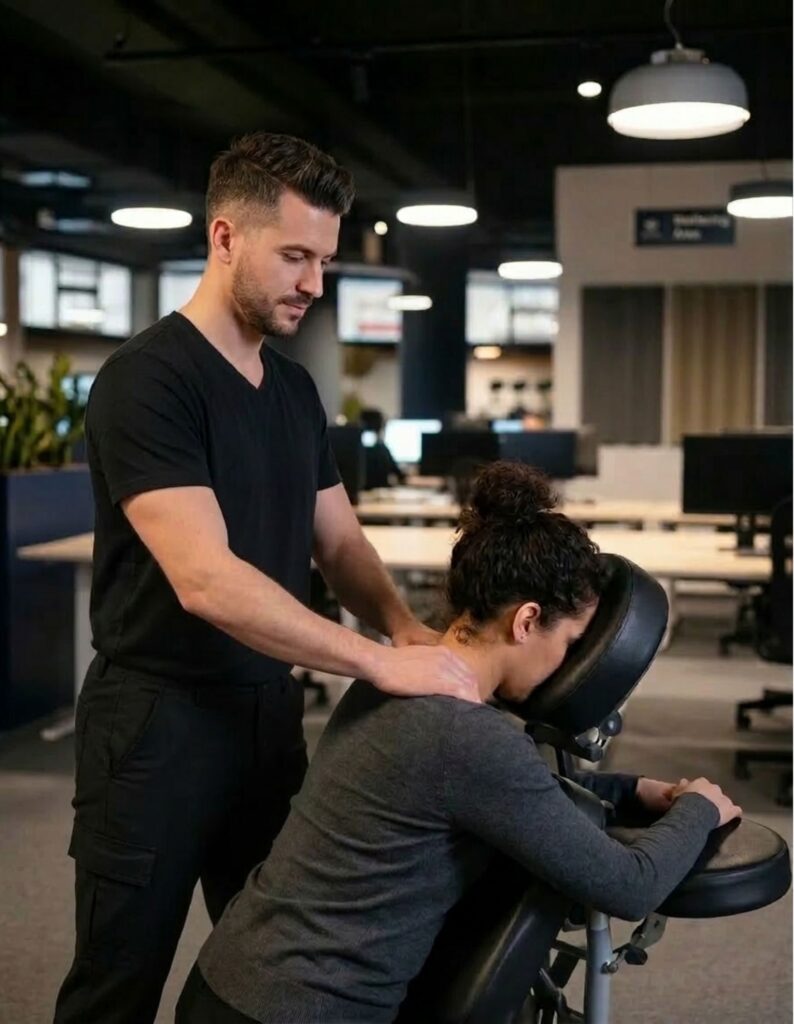
A short session — typically 10 minutes, delivered seated and fully clothed — gives attendees a noticeable sense of alertness heading into the first afternoon session, addressing the same post-lunch dip directly rather than just distracting from it. Unlike a coffee station, which offers a temporary stimulant effect, a massage station addresses the physical tension and fatigue driving the slump in the first place.
Attendees who’ve been sitting in sessions since early morning, often after a poor night’s sleep in an unfamiliar hotel, are carrying a level of physical tension a coffee simply doesn’t touch. A short session targeting the neck and shoulders addresses that directly, in a way that tends to show up in how alert someone looks and sounds walking into the next session.
A natural, low-effort conversation starter
Queuing for a few minutes near a massage station puts attendees next to each other with nothing else to do but talk — a far more natural networking setup than a scheduled “networking session” that puts people on the spot. Conversations that start this way tend to feel more genuine than ones prompted by an agenda item labelled “networking.”
This matters because forced networking formats are consistently one of the lowest-rated parts of a conference agenda in attendee feedback, precisely because they feel manufactured. A shared, low-pressure activity like a massage queue creates the same connection opportunity without the awkwardness of a structured exercise.
Something attendees actually remember and talk about post-event
Post-conference feedback and social mentions tend to gravitate toward the parts of the day that felt different from a typical conference. A well-placed massage station is exactly the kind of detail that shows up in attendee feedback and informal conversation well after the event ends, in a way a standard lunch buffet rarely does.
For repeat conferences in particular, this matters over multiple years. An agenda full of solid but unremarkable sessions blends together in attendees’ memory; a distinctive, well-executed touch like this is what people specifically cite when deciding whether to register again the following year.
Where it fits in the lunch break format
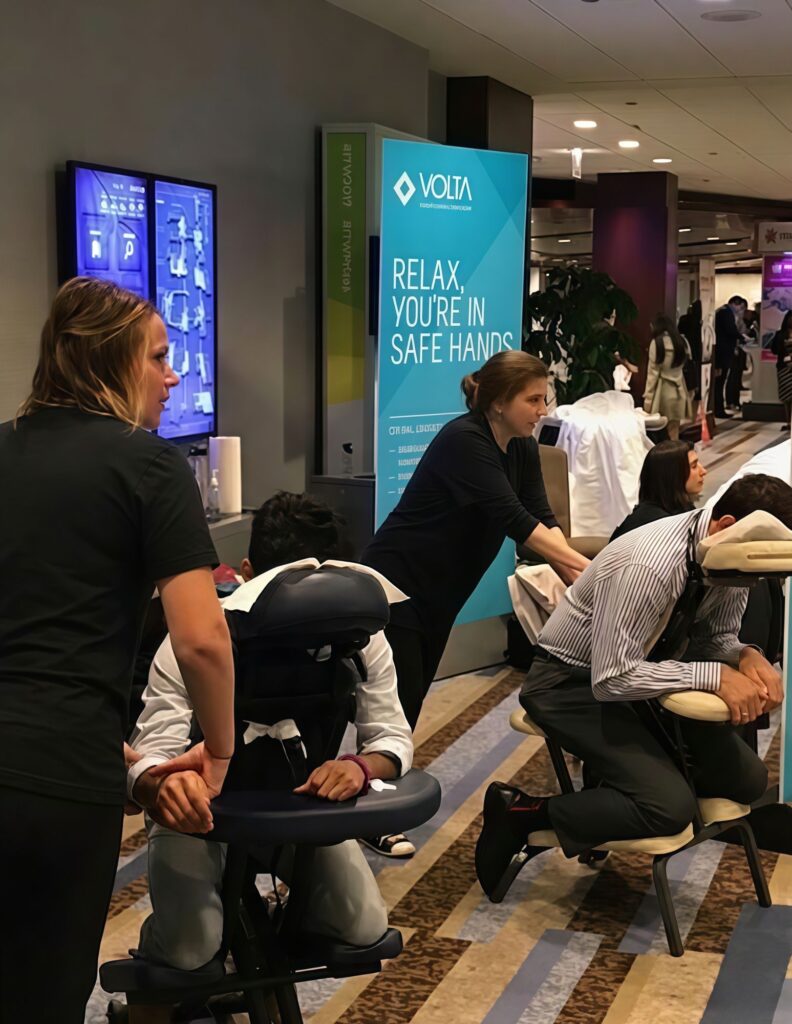
The most practical setup places the massage station near the lunch buffet or networking lounge, rather than in a separate room attendees have to seek out. This keeps it visible and low-friction: attendees can queue while eating, chatting, or waiting for a session to reopen, rather than needing to carve out extra time from an already tight break.
For a typical 60 to 90 minute lunch window, a small team of therapists running short rotations can see a meaningful share of attendees without anyone needing to skip food or miss a networking conversation entirely — the station simply becomes one more thing happening in the room, rather than a separate activity competing for a dedicated block of time.
- Position the station in a high-traffic area near catering, not tucked away in a side room
- Run short 10-minute sessions so the queue keeps moving throughout the full lunch window
- Brief the massage team on the break schedule so sessions wrap up before the next session starts
- Signpost it clearly on the event app or agenda so attendees know it’s there before lunch begins
None of this requires reinventing the lunch break — it’s a modest addition layered onto an existing format, which is part of why it’s straightforward for organizers to trial at their next event without overhauling the agenda.
Making it part of the organizer’s value proposition
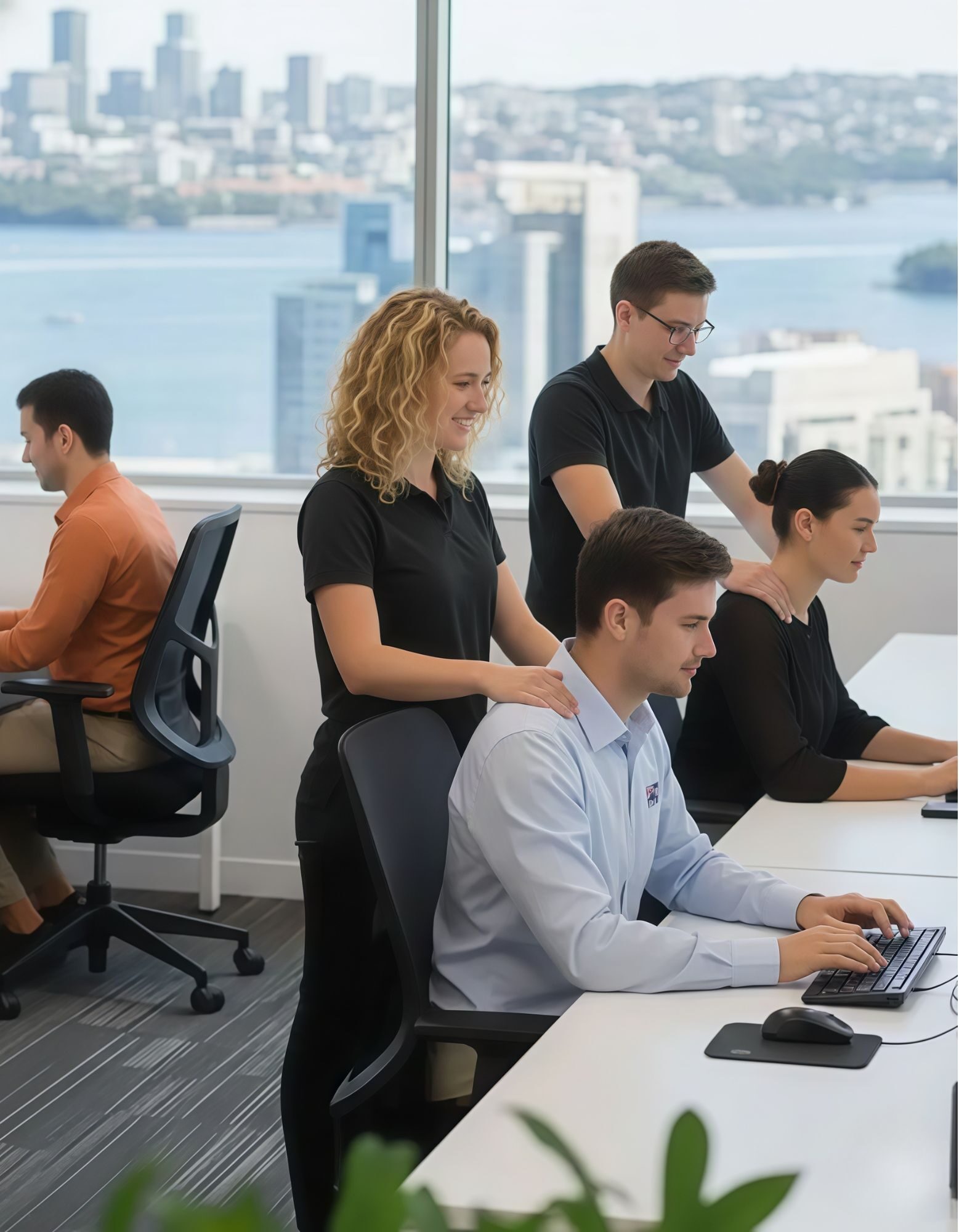
Beyond the immediate engagement boost, a visible wellness element strengthens how a conference is remembered and described afterward — which matters for repeat attendance and sponsor renewal alike. Many organizers pair a lunch break massage station with a broader event massage booking that also covers registration or exhibition hall areas, or bring in massage angels circulating through the room for a lighter-touch version of the same idea.
For conferences with a sponsorship model, a wellness station also opens up a natural branding opportunity — a sponsor’s logo attached to the one part of the day attendees genuinely look forward to tends to land better than another branded lanyard or notepad, since it’s associated with something attendees actually experienced rather than just carried around. It also gives account managers a genuinely positive detail to highlight when pitching the sponsorship package for next year’s event.
How Corporate Care Therapies supports conference organizers
Corporate Care Therapies has delivered corporate massage to Australian conferences and corporate events for over 20 years, with accredited therapists experienced in working around tight break windows and high attendee volumes. Bookings can be scaled to a single-day conference or a multi-day program, coordinated directly with catering and registration timing so the station runs smoothly without extra oversight from the events team. Further context on how event organizers are approaching wellness elements is available in Event Massage: why wellness experiences are becoming essential for modern corporate events.
Summary
Conference lunch breaks sit at a predictable low point in attendee energy, driven by a well-documented physiological pattern rather than poor programming. Corporate massage addresses that dip directly, gives attendees a natural reason to disconnect and talk, and tends to become one of the details people remember and mention after the event ends. Positioned in a high-traffic area and run in short, efficient sessions, it turns dead time into one of the more genuinely engaging parts of the day — without adding complexity to an already tight schedule.
For organizers weighing up where to invest a limited experiential budget, the lunch window is worth particular attention: it’s the one part of almost every conference agenda guaranteed to underperform on its own, which makes it one of the highest-leverage places to make a small, well-placed change.Planning your next conference agenda? Contact Corporate Care Therapies to build a corporate massage station into your lunch break schedule, timed around your catering and session breaks