As winter arrives across Australia, many workplaces experience a noticeable shift in employee energy levels, motivation, and overall wellbeing. Colder weather, shorter daylight hours, seasonal illnesses, and increased fatigue can affect how employees feel and perform throughout the workday.
While winter may seem like just another season, it can create unique challenges for businesses and employees alike. Many workers report feeling more tired, less motivated, and mentally drained during the colder months. Combined with workplace pressures and ongoing responsibilities, winter fatigue can significantly impact productivity, engagement, and workplace morale.
For employers, winter often brings additional concerns such as increased absenteeism, reduced workplace energy, and lower employee wellbeing. As organisations continue to prioritise employee wellness, many are seeking practical solutions that help teams stay healthy, focused, and productive throughout the season.
One increasingly popular solution is Seated Chair Massage. By providing employees with an opportunity to relax, recharge, and relieve physical tension, seated chair massage supports both physical and mental wellbeing during one of the most challenging times of the year.
At Corporate Care Therapies, we help businesses across Australia create healthier and more productive workplaces through professional workplace massage programs designed to support employee wellbeing throughout every season, including winter.
Understanding Winter Fatigue in the Workplace
Winter fatigue is a common condition that affects many people during colder months. While not a medical diagnosis, it refers to the physical and mental exhaustion often experienced during winter due to environmental and lifestyle factors.
Employees experiencing winter fatigue may notice:
- Lower energy levels
- Difficulty concentrating
- Increased tiredness
- Reduced motivation
- Mood changes
- Increased stress levels
- Poor sleep quality
- Reduced workplace engagement
These symptoms can affect employees regardless of their role or industry.
For businesses, winter fatigue can contribute to:
- Reduced productivity
- Lower employee morale
- Increased sick leave
- Higher workplace stress
- Reduced collaboration
- Decreased employee engagement
Understanding how winter affects employees is the first step toward creating a supportive and productive workplace environment.
Why Employees Feel More Tired During Winter
Several factors contribute to increased fatigue during winter.
Reduced Sunlight Exposure
Shorter days and reduced sunlight can disrupt the body’s natural circadian rhythm.
Sunlight plays an important role in regulating:
- Sleep patterns
- Mood
- Energy levels
- Alertness
When daylight hours decrease, many people experience changes in their energy and motivation.
Seasonal Illnesses
Winter is often associated with increased cases of:
- Colds
- Flu
- Respiratory infections
Even minor illnesses can leave employees feeling drained and less productive.
Less Physical Activity
Many people become less active during colder months.
Reduced physical activity can contribute to:
- Lower energy levels
- Muscle stiffness
- Reduced circulation
- Increased fatigue
Increased Workplace Stress
For many employees, business responsibilities continue to increase regardless of seasonal conditions.
Balancing workplace demands while feeling physically tired can create additional stress and mental exhaustion.
The Business Impact of Winter Fatigue
Winter fatigue affects more than individual employees.
It can influence overall business performance in several ways.
Reduced Productivity
Employees experiencing fatigue often struggle with concentration and focus.
Tasks may take longer to complete, and performance levels may decline.
Increased Absenteeism
Winter illnesses combined with fatigue can lead to higher rates of sick leave.
This places additional pressure on teams and may affect operational efficiency.
Lower Employee Engagement
When employees feel exhausted, they may become less engaged in workplace activities and team collaboration.
Increased Burnout Risk
Ongoing fatigue combined with workplace stress can increase the likelihood of burnout.
Businesses that proactively support employee wellbeing are often better positioned to maintain productivity and morale throughout winter.
Why Workplace Wellness Matters During Winter
Employee wellbeing should be a year-round priority, but winter presents unique challenges that require additional attention.
Workplace wellness initiatives help employees:
- Manage stress
- Maintain energy levels
- Improve mental wellbeing
- Stay physically comfortable
- Feel valued and supported
Organisations that invest in employee wellbeing often experience benefits such as:
- Improved productivity
- Better retention
- Stronger workplace culture
- Reduced absenteeism
- Higher employee satisfaction
One of the most effective wellness solutions for winter is Seated Chair Massage.
What Is Seated Chair Massage?
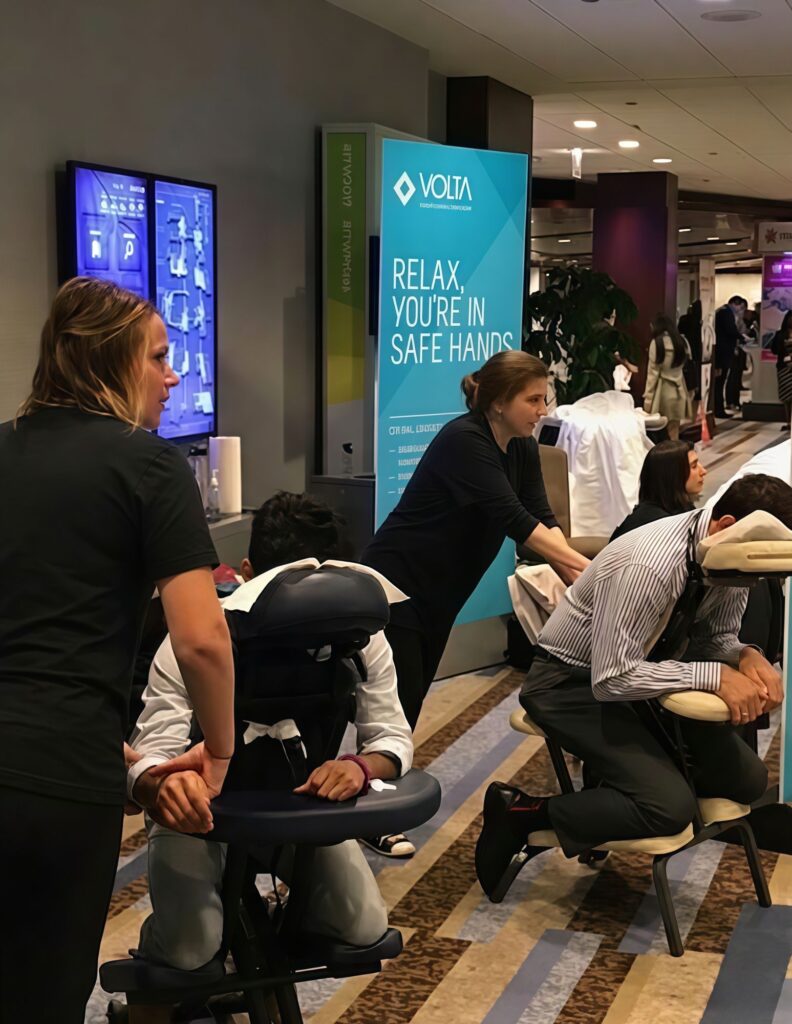
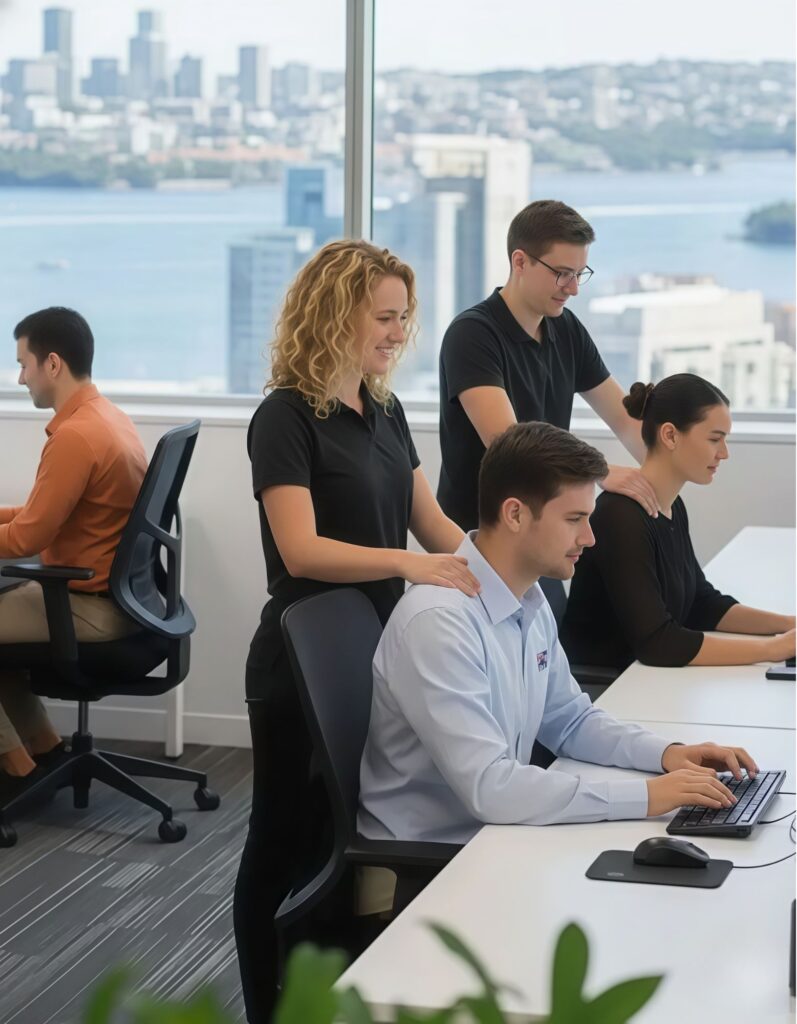
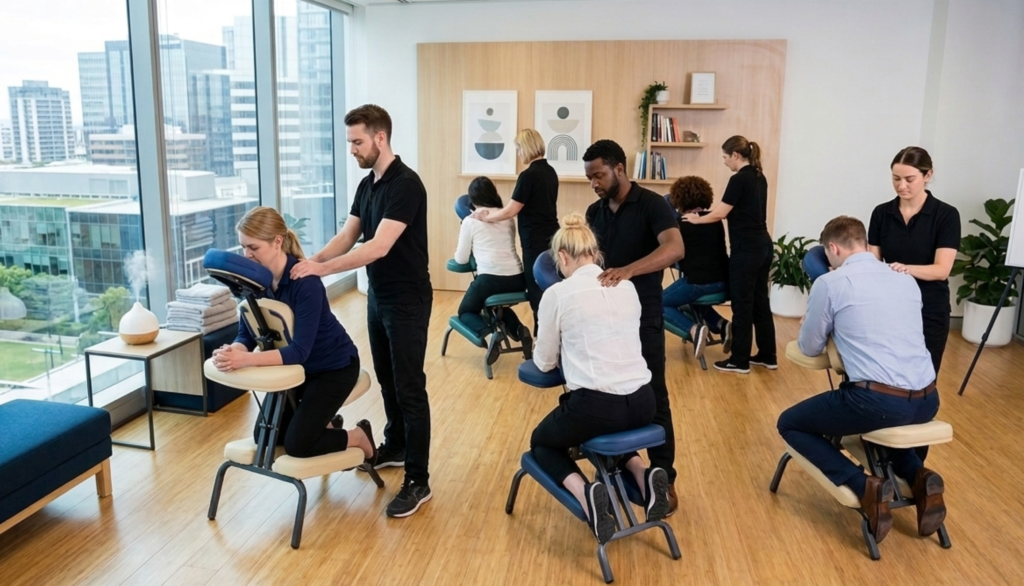
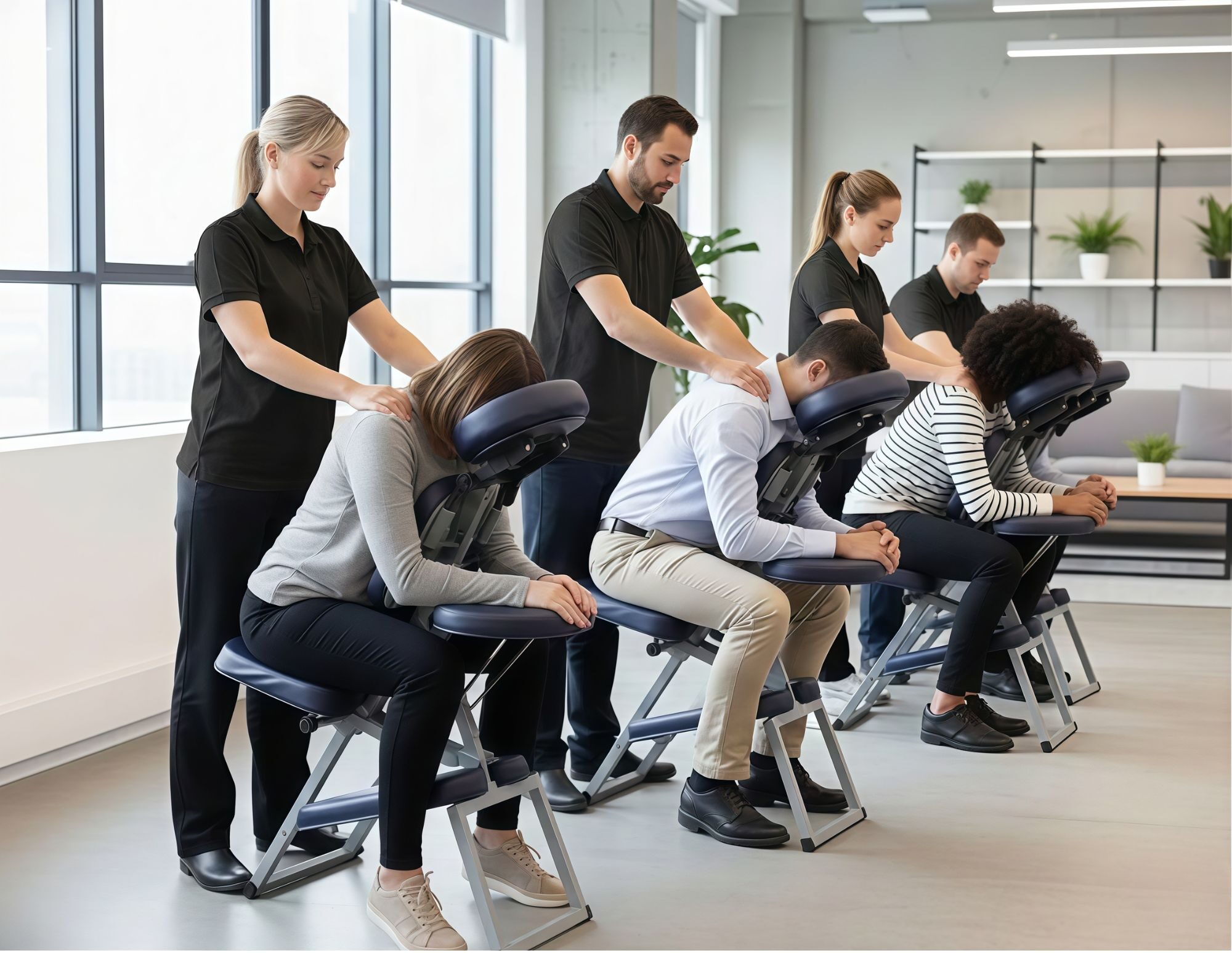
Seated Chair Massage is a convenient form of massage therapy specifically designed for workplace environments.
Employees remain fully clothed and sit comfortably in a specially designed massage chair while a professional therapist focuses on key tension areas including:
- Neck
- Shoulders
- Upper back
- Arms
- Hands
Sessions typically last between 10 and 20 minutes, making them easy to incorporate into busy work schedules.
Because the treatment is short and convenient, employees can enjoy the benefits without disrupting productivity.
How Seated Chair Massage Helps Combat Winter Fatigue
Improves Circulation
Cold weather can contribute to reduced circulation and muscle stiffness.
Massage helps stimulate blood flow throughout the body, delivering oxygen and nutrients to muscles and tissues.
Improved circulation can help employees feel:
- More energised
- Less sluggish
- More physically comfortable
Relieves Muscle Tension
Many employees experience increased muscle tightness during winter due to:
- Cold temperatures
- Reduced physical activity
- Prolonged sitting
Seated Chair Massage helps release tension in commonly affected areas such as the neck, shoulders, and upper back.
Employees often feel more relaxed and physically refreshed after treatment.
Encourages Relaxation
Stress and fatigue often go hand in hand.
Massage helps activate the body’s relaxation response, helping employees feel calmer and less overwhelmed.
This can be particularly beneficial during busy work periods when stress levels are elevated.
Supporting Mental Wellbeing During Winter
Mental wellbeing plays a significant role in workplace performance.
Winter fatigue often affects not only physical energy but also emotional wellbeing.
Employees may experience:
- Irritability
- Lack of motivation
- Mental exhaustion
- Increased stress
Seated Chair Massage helps support mental wellness by providing employees with a dedicated opportunity to relax and recharge.
Many employees report feeling:
- More positive
- Less stressed
- Better able to focus
- More mentally refreshed
These benefits can contribute to a healthier workplace environment.
Improving Workplace Productivity
Employee productivity is closely linked to physical and mental wellbeing.
When employees feel tired and uncomfortable, their ability to perform at their best may decline.
Seated Chair Massage supports productivity by helping employees:
Improve Focus
A short massage session can help clear mental fatigue and improve concentration.
Increase Energy
Employees often return to work feeling refreshed and more alert.
Reduce Workplace Discomfort
Physical discomfort can be a major distraction.
Massage helps employees feel more comfortable and better able to focus on their work.
Enhance Performance
Employees who feel healthier and less stressed are often more productive and engaged.
Reducing Workplace Stress During Winter
Stress remains one of the biggest challenges facing modern workplaces.
Winter can intensify stress levels due to:
- Increased workloads
- Seasonal illnesses
- Reduced energy levels
- Personal commitments
Massage therapy is widely recognised as a valuable stress-management tool.
Regular workplace massage programs can help employees:
- Relax physically
- Reduce mental tension
- Improve emotional wellbeing
- Manage workplace pressures more effectively
This contributes to a healthier and more resilient workforce.
Enhancing Employee Morale
Winter can sometimes create a workplace atmosphere where employees feel tired and disengaged.
Providing wellness initiatives demonstrates that an organisation values its employees.
Seated Chair Massage helps employees feel:
- Appreciated
- Supported
- Valued
This positive experience can significantly improve workplace morale and strengthen team culture.
Employees are more likely to remain motivated when they feel their wellbeing is genuinely prioritised.
Supporting Employee Retention
Today’s workforce increasingly values employers who invest in employee wellbeing.
Workplace wellness programs can influence:
- Job satisfaction
- Employee loyalty
- Workplace culture
- Retention rates
Offering wellness initiatives such as Seated Chair Massage demonstrates a commitment to employee health and wellbeing.
This can help businesses attract and retain talented employees in a competitive job market.
Winter Wellness Events and Employee Engagement
Many organisations now include Seated Chair Massage as part of:
- Winter wellness campaigns
- Employee appreciation programs
- Corporate wellbeing initiatives
- Team-building activities
- Workplace health events
These programs create opportunities for employees to engage in positive wellbeing experiences while strengthening workplace culture.
Why HR Teams Are Investing in Winter Wellness Programs
Human Resources professionals increasingly recognise the importance of supporting employee wellbeing throughout the year.
Winter wellness programs help address seasonal challenges while promoting:
- Employee engagement
- Stress management
- Workplace satisfaction
- Burnout prevention
Seated Chair Massage aligns perfectly with these objectives because it provides immediate and highly appreciated benefits.
Unlike some wellness initiatives that struggle to gain participation, workplace massage programs often receive strong employee engagement.
Why Businesses Choose Corporate Care Therapies
Corporate Care Therapies provides professional workplace wellness services designed specifically for modern businesses.
Organisations choose Corporate Care Therapies because of their:
- Experienced therapists
- Flexible scheduling
- Workplace wellness expertise
- Tailored corporate programs
- Reliable service delivery
Their Seated Chair Massage services are suitable for:
- Corporate offices
- Government organisations
- Professional services firms
- Educational institutions
- Healthcare organisations
- Conferences and corporate events
The Future of Workplace Wellness
Employee wellbeing continues to evolve as a key business priority.
Organisations increasingly understand that healthy employees contribute directly to:
- Better productivity
- Stronger workplace culture
- Improved retention
- Sustainable business growth
Future workplace wellness strategies will continue focusing on:
- Mental health support
- Employee experience
- Burnout prevention
- Flexible wellbeing programs
Seated Chair Massage remains one of the most practical and effective ways to support employee wellbeing while delivering measurable workplace benefits.
Conclusion
Winter fatigue is a genuine workplace challenge that can affect employee energy, productivity, morale, and overall wellbeing.
As businesses seek ways to support employees during colder months, workplace wellness initiatives become increasingly important.
Seated Chair Massage offers a simple yet highly effective solution that helps employees manage stress, reduce physical tension, improve focus, and maintain energy levels throughout winter.
By investing in employee wellbeing, organisations can create healthier, happier, and more productive workplaces while strengthening employee engagement and workplace culture. Corporate Care Therapies proudly supports businesses across Australia with professional Seated Chair Massage services that help employees thrive during winter and throughout the year. Based on the original blog provided, this revised version directly addresses the client’s requested winter/winter fatigue angle while keeping location references out of the title and naturally mentioning Australia only within the introduction and conclusion.