Sitting at a desk doesn’t feel like physical exertion, which is exactly why the strain it causes tends to go unaddressed. There’s no single moment of injury to point to — just hours of static loading, repeated day after day, that gradually reshapes posture and leaves specific areas of the body carrying tension they were never designed to hold for that long. Workplace massage is one of the more direct ways to counteract that build-up, precisely because it targets the same areas the research shows are affected most heavily.
This article looks at what prolonged desk-bound posture actually does to the body, why the strain builds even when someone is sitting “correctly,” and where workplace massage genuinely helps — and where it works best alongside movement, rather than as a replacement for it, so expectations stay realistic rather than overhyped.
What prolonged desk-bound posture actually does to the body
This isn’t a vague discomfort — it’s been measured directly. A controlled study of office computer work, published in the, tracked discomfort over two hours of continuous seated computer work and found it increased across the whole body, reaching clinically meaningful levels specifically in the low back and hip, thigh and buttock area. Over that same period, the lower back’s natural curve measurably flattened and pelvic movement increased, as the body shifted around trying to find a less loaded position.
That last detail matters. The increase in pelvic movement suggests the body isn’t simply “getting tired” — it’s actively compensating, redistributing load away from fatigued tissue and onto whatever’s available nearby. Over a full workday, that compensation pattern repeats constantly, and the areas absorbing the redistributed load are rarely the ones designed to carry it long-term.
This also explains why the discomfort often feels disproportionate to the effort involved. Nobody would expect two hours of sitting still to produce the same fatigue as two hours of physical labor, yet the research shows measurable, clinically meaningful discomfort building in that same timeframe — precisely because the mechanism isn’t exertion, it’s sustained load on tissue that was never built to stay static for that long.
The lower back and pelvis bear the brunt
Static sitting keeps the same segment of the lower spine under sustained, low-level load for hours, which is a very different demand to the brief, varied loading the spine handles during normal movement. The flattened lordotic curve observed in the research above is the body’s structural response to that sustained position — and it’s a documented, measurable change, not just a subjective feeling of stiffness, which is worth noting for anyone inclined to dismiss desk-related back discomfort as minor.
Hip flexors tighten while glutes and core switch off
Sitting keeps the hip joint in a flexed position for hours, which shortens the hip flexor muscles over time while the glutes and deep core stay largely inactive. A cross-sectional study comparing office workers with and without low back pain found measurable differences in hip flexion muscle strength and hip joint range of motion between the two groups, alongside reduced flexibility in the muscles surrounding the hip. The pattern is self-reinforcing: tighter hip flexors alter how the lumbar spine and pelvis move together, which increases the load the lower back has to compensate for during ordinary daily movement, not just at a desk.
Why the strain builds even with “good” posture
It’s tempting to treat this as a posture problem that a better chair or a stricter sitting position would fix. The research points to something slightly different: the researchers behind the two-hour sitting study noted that muscle deconditioning from habitually low activation, combined with sustained low-level loading of passive tissue, are both plausible drivers of the discomfort observed — meaning the core issue is staying still for too long, not simply sitting “incorrectly.” Even a well-adjusted, ergonomically ideal sitting position still involves near-total stillness for hours at a time, and stillness itself is the underlying stressor.
This is a genuinely useful reframe for anyone who’s tried correcting their posture without much relief. Sitting up straighter in an otherwise static position doesn’t change how long the same muscles stay under sustained load — it just changes which muscles are doing the holding. The variable that actually matters most is how long any position, good or bad, is held without a break.
How workplace massage directly counteracts this strain
Restoring blood flow to tissues starved by static loading
Sustained pressure and stillness reduce circulation to the muscles carrying the load, which slows the clearance of the metabolic by-products that contribute to that dull, heavy stiffness by the afternoon. Hands-on massage work mechanically increases local blood flow, which is part of why a session produces a noticeably different, looser sensation almost immediately rather than requiring days to take effect.
This is one of the more reliable, well-understood mechanisms behind why massage feels effective so quickly, even for tension that took hours to build. It doesn’t require the deeper, longer-term adaptation that strengthening or stretching programs need to show results — the circulatory effect is immediate and directly addresses one of the specific mechanisms the sitting research points to.
Releasing tension concentrated in the lower back and upper back
A properly delivered seated session reaches the full length of the back — lower back included, not just the shoulders and neck most people associate with a quick office massage. Given that the lower back is one of the two areas the research above identifies as most affected by prolonged sitting, this is where a session tends to make the most noticeable, immediate difference.
Where massage has real limits, and movement still matters
It’s worth being honest about scope here. A clothed, seated workplace massage session is well suited to the back, shoulders and neck, but it isn’t designed to directly lengthen the hip flexors at the front of the hip — that’s a job for active stretching and movement, not hands-on bodywork delivered through clothing in a seated position. The two aren’t competing solutions; they cover different parts of the same problem, in much the same way a recurring massage and a daily stretching habit work best together rather than as alternatives.
Businesses looking for a single fix to desk-related strain won’t find one here, and any claim that a massage program alone fully resolves the musculoskeletal effects of prolonged sitting should be treated with the same scepticism as any other single-intervention promise. The honest picture is a combined one: massage for the tissue that’s already tight, movement for the range of motion that only active stretching restores.
What a workplace massage session targeting this looks like
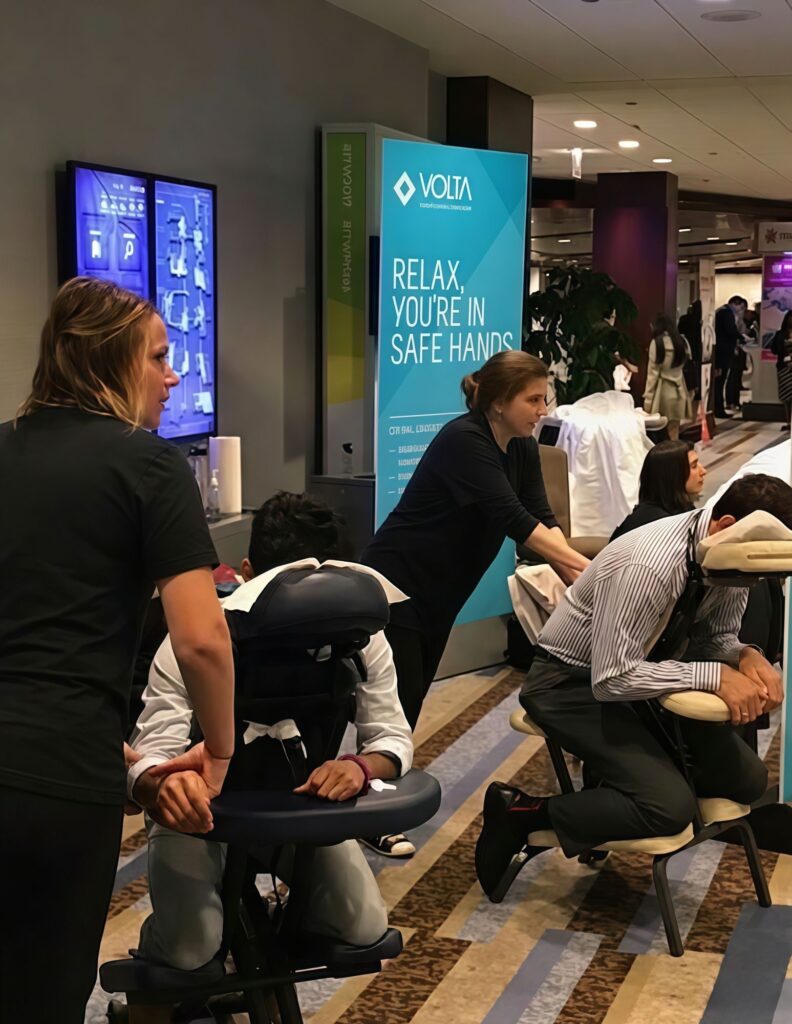
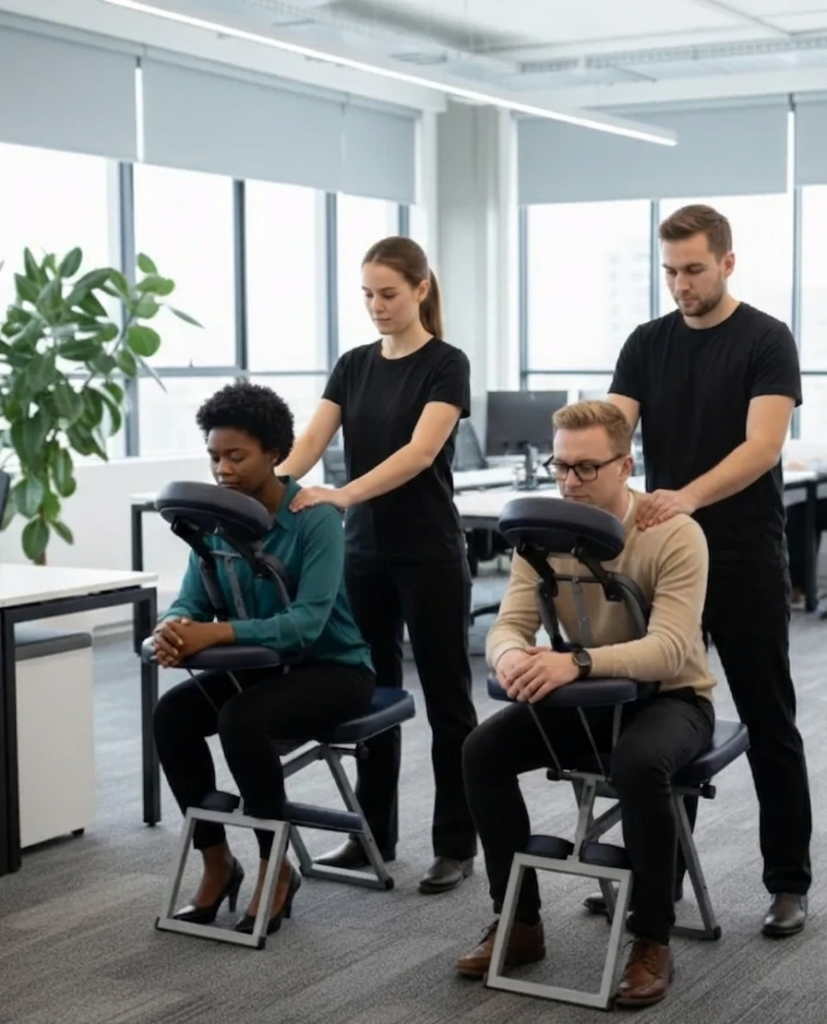
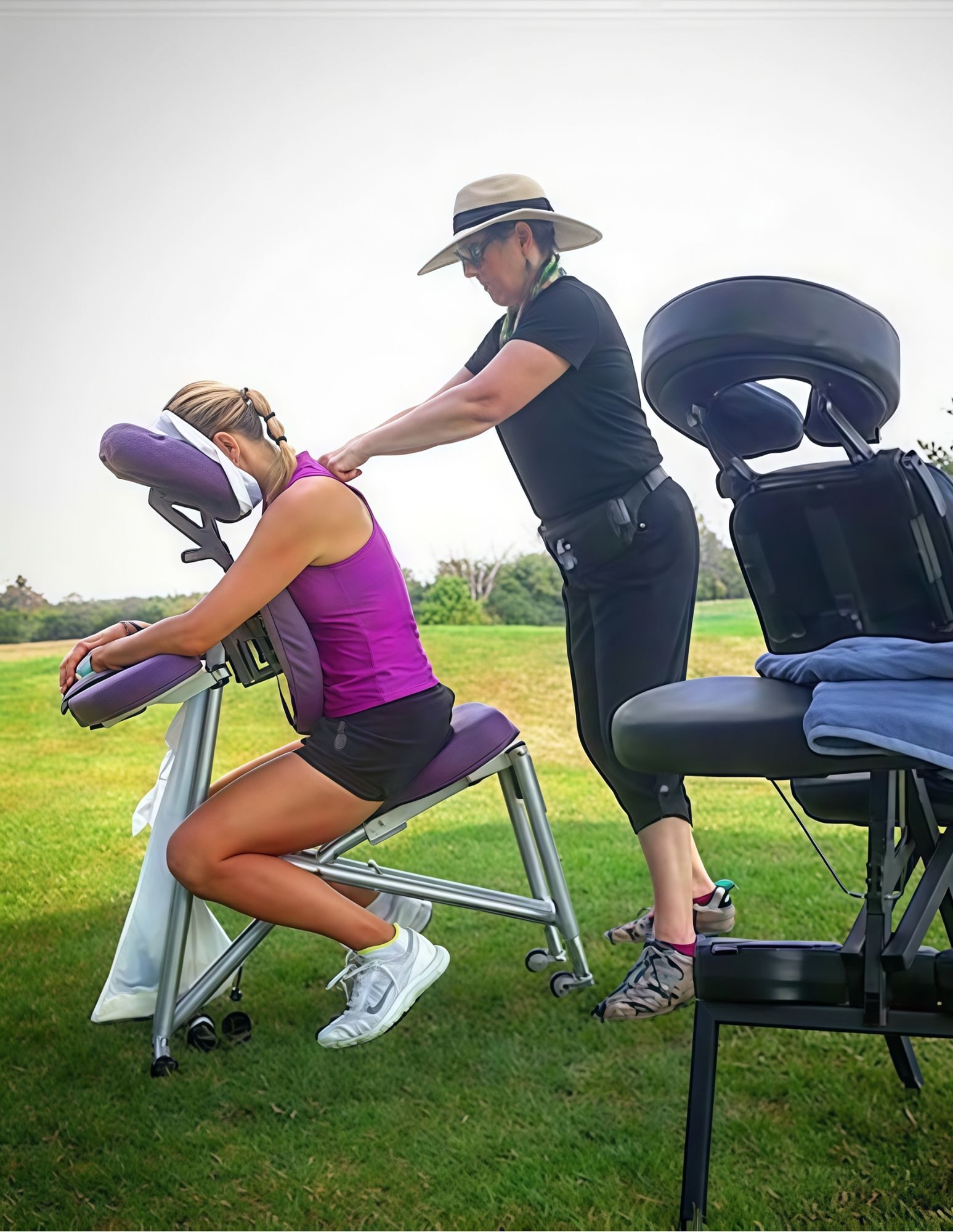
Most sessions use a seated chair massage or desk massage format, delivered fully clothed in a specially designed ergonomic chair that positions the body forward, opening up the full length of the back for a therapist to work along. A 10 to 15 minute session is usually enough to noticeably ease the lower and upper back tension that builds over a working day, without requiring anyone to change clothes or leave their floor.
For the hip flexor side of the equation, pairing a recurring massage program with a short daily stretching habit — such as the routine in Corporate Care Therapies’ office stretches guide — covers the part of the strain pattern massage alone doesn’t reach.
Building this into a broader wellness program
A single session eases what’s already built up, but the sitting pattern that caused it resumes the moment someone returns to their desk. A recurring booking, folded into a broader corporate wellness program, keeps pace with a strain pattern that rebuilds continuously rather than after a single bad day — which matters more here than in most wellness contexts, given how measurably fast the discomfort accumulates.
Summary
Prolonged desk-bound posture strains the body in specific, measurable ways — concentrated in the lower back and hips, driven less by poor posture than by sustained stillness itself. Workplace massage counteracts a real part of that pattern directly, restoring circulation and releasing tension across the back where the research shows discomfort concentrates fastest. It has real limits too: hip flexor tightness responds better to active stretching than to seated bodywork, which is why the two are most effective paired together rather than treated as competing options. Addressed together, on a recurring basis, they cover the strain pattern desk-bound work creates far more completely than either approach delivers alone.
None of this requires a dramatic overhaul of how a team works. A recurring massage booking and a shared stretching resource cost very little to trial, and both address a strain pattern that the research shows builds measurably within a single two-hour stretch of sitting — which makes the case for doing something about it fairly straightforward.
Ready to counteract desk-bound strain across your team? Contact Corporate Care Therapies to set up a workplace massage program built around how your team actually works and sits.